AI Safety From First Principles Banner

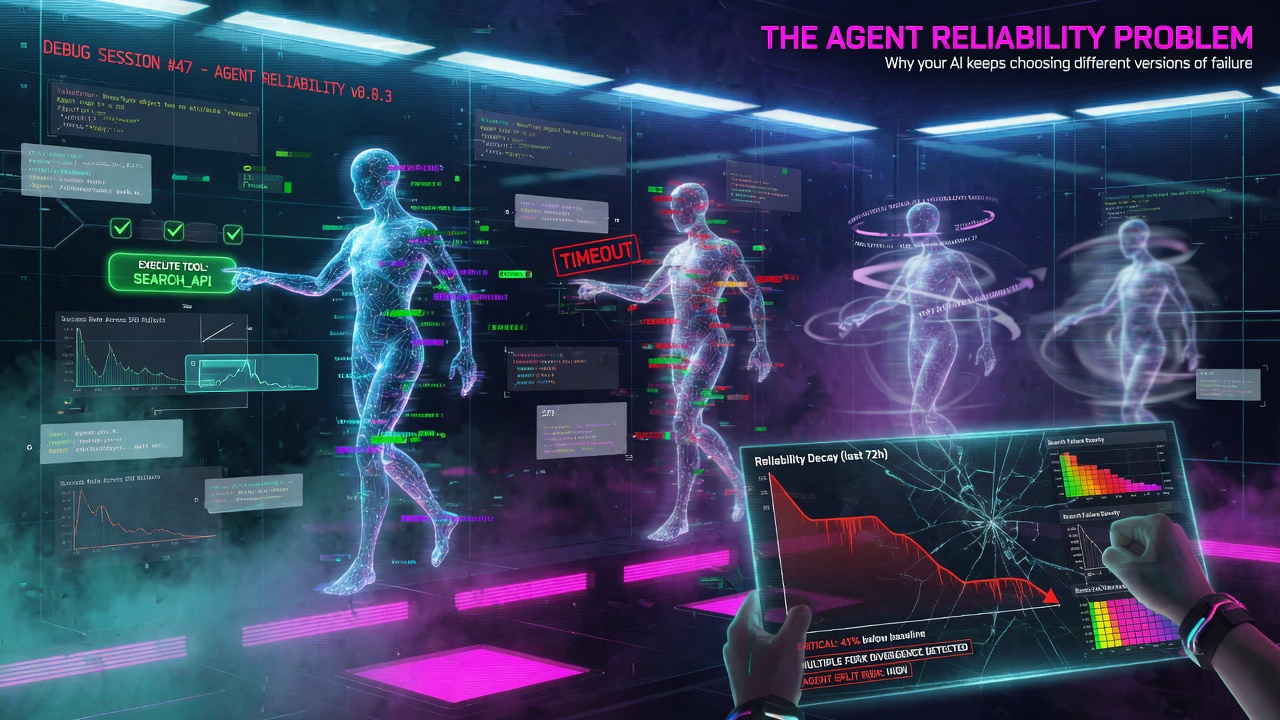
AI Safety From First Principles: What Actually Matters vs What's Hype

TL;DR “AI safety” covers four distinct layers - product safety, system safety, model alignment, and civilisational safety - and conflating them produces incoherent debates For engineers building production systems today, system safety dominates: most real incidents trace back to flawed system design around the model, not the model itself Practical mitigations are unglamorous: scope tool permissions, bound blast radius, require human approval for irreversible actions, validate outputs, and observe everything The hype conflates capability with intent, existential risk with ordinary risk, and refusal with safety - all three conflations make the conversation harder to act on The load-bearing principle across all four layers is the same: a system should fail in ways that are detectable, recoverable, and bounded The AI safety conversation has reached the point where the phrase has stopped meaning anything specific. In the same week, you will see “AI safety” used to describe content moderation on a chat product, the alignment of frontier models toward human values, the question of whether superintelligence ends civilisation, and a regulatory paper about copyright. These are not the same problem. Treating them as one conversation is the reason the conversation never resolves. ...

April 30, 2026 · 9 min · James M
When to Fine-Tune vs When to RAG Banner

When to Fine-Tune vs When to RAG: Choosing Your AI Architecture

TL;DR The default choice for most teams should be RAG - it is reversible in days, whereas a bad fine-tuning decision is an expensive sunk cost that requires retraining to fix RAG fails when the question requires reasoning across an entire knowledge domain rather than extracting a specific answer from a passage; fine-tuning handles that case better Fine-tuning fails silently when underlying facts change - it produces confidently wrong, stale answers with no warning; RAG automatically picks up changes at query time A practical decision framework: use RAG for volatile facts and cited answers, use fine-tuning for stable style, voice, and cross-domain reasoning The best production systems use both: a fine-tuned base model for stable domain knowledge, augmented with retrieval for current and specific information The question I get asked most often by engineers starting to build with language models is some variation of: “should we fine-tune or should we do RAG?” It is almost always the wrong question, but it is the wrong question in an instructive way. The reason it gets asked so much is that the choice feels architectural, and architectural choices feel like the kind of thing you commit to once and live with. In practice, the choice is closer to “should I use a database or a cache” - the answer is usually some of both, applied to different problems, and the ratio shifts as the system matures. ...

April 29, 2026 · 11 min · James M
AI Hallucinations Understanding and Mitigating False Outputs Banner

AI Hallucinations: Understanding and Mitigating False Outputs

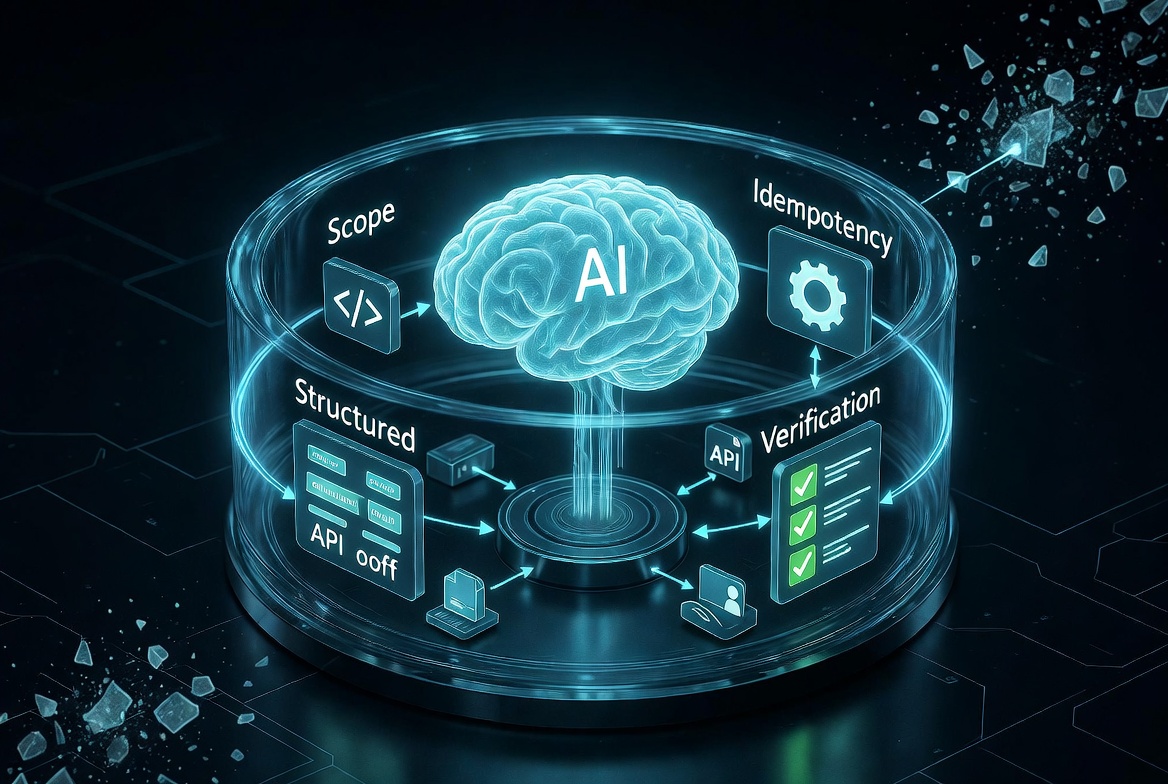
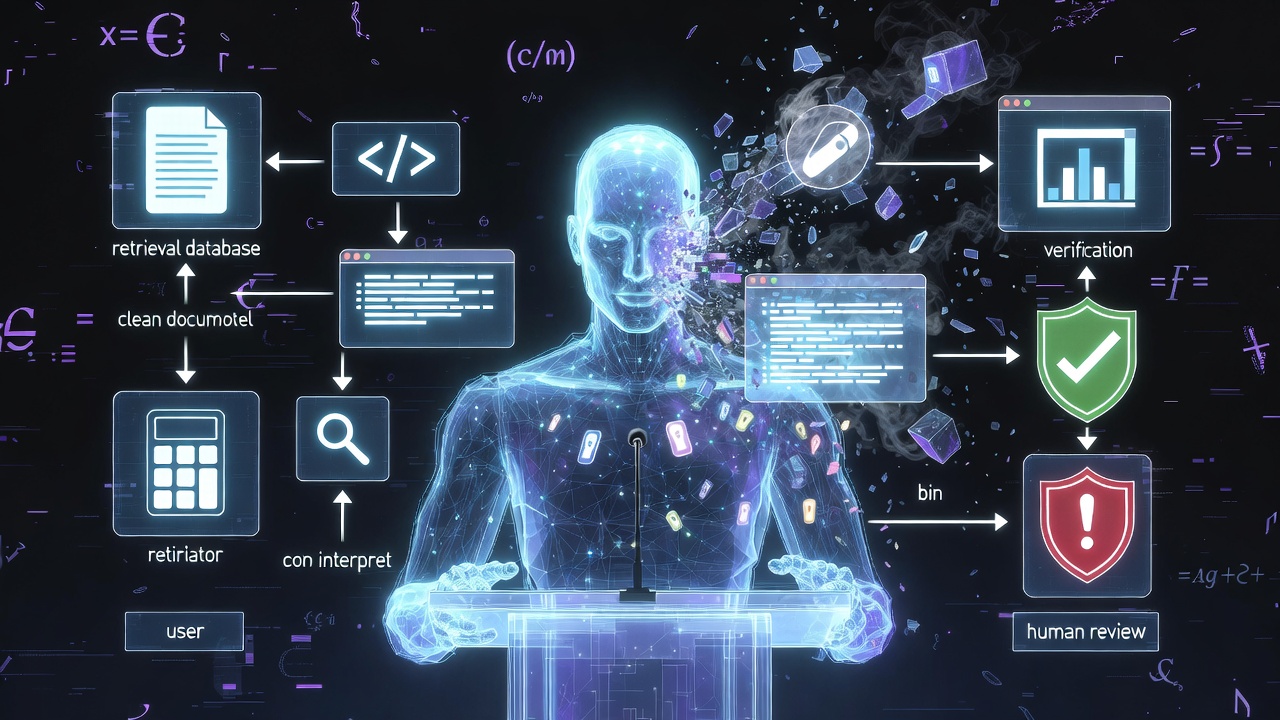
TL;DR AI hallucinations are not perceptual errors - they are confident pattern completions that happen to be unanchored in the world, and no model will ever stop producing them entirely because truth is not what the training objective optimises for Hallucinations cluster into five distinct types: factual, citation, code and API, instruction (claiming to have done something it did not), and reasoning - each with a different root cause and a different mitigation The mitigations that genuinely move the dial are structural: retrieval-augmented generation, tool use over recall, constrained structured outputs, explicit verification layers, and lower temperature for factual tasks The model is not the product; the model surrounded by retrieval, verification, structured outputs, calibration, and human-in-the-loop review is the product Hallucination is not the bug - the absence of a system around the model is the bug, and treating it as an engineering problem rather than a model problem is what separates demos from production The word “hallucination” is one of the most successful pieces of accidental marketing in our industry. It is a soft, almost endearing way to describe an LLM stating with full confidence that a function exists when it does not, that a court case was decided when it was not, that a paper was written by an author who has never published in that field. It makes the failure sound like a quirk rather than the central reliability problem of the entire technology. ...

April 28, 2026 · 13 min · James M
MCP Servers for a Home AI Agent Banner

Giving Your Home AI Agent Real Tools: MCP Servers on a Mac Studio

TL;DR Problem: a local agent that can only chat is a toy. The value is in what it can do. Answer: Model Context Protocol servers, running locally on the Mac Studio, expose filesystem, calendar, mail, notes, and a handful of custom tools. Runtime: one supervisord config, a small router, and per-server allowlists so nothing escapes its box. Security posture: no tool runs without a policy, secrets live in the macOS Keychain, and every call is logged to a local SQLite file I can grep at 11pm. Result: I can phone the agent (see How to Phone Your Home AI Agent), ask “move the CI failure email to triage and put a 15 minute hold on my calendar at 4”, and it actually does it. Why MCP and Not “Just Functions” Before MCP I had a directory of half-finished Python shims. Each one spoke a slightly different dialect: one took JSON arguments, one took positional args, one returned markdown and one returned a dict. Adding a new tool meant editing the agent prompt, the router, and the caller. ...

April 27, 2026 · 8 min · James M

AI Reliability Is Weird: Why Testing LLMs Breaks Everything You Know

TL;DR Traditional testing assumes determinism - given input X, function f always returns Y - but LLMs are non-deterministic, which breaks assertion-based testing at its foundation The same agentic task run twice may produce different but equally correct code, making exact-output assertions brittle and often useless The new paradigm shifts from “test the code” to “verify the intent”: property-based testing, LLM-as-a-Judge evaluation, golden datasets for regression, and human review for overall correctness Structured outputs enforce syntactic correctness at generation time, but semantic correctness - whether the output actually solves the right problem - still requires layered verification on top The future of AI quality assurance is designing robust evaluation frameworks and measuring properties of acceptable outputs, not writing exhaustive unit tests for code the model may generate differently next time We’ve embraced the future. AI agents like Cline are now the primary “builders” of software, executing complex engineering plans from high-level specifications. As I’ve argued in “The Architect vs The Builder”, the human role is shifting from execution to architectural oversight and defining intent. The patterns that determine whether agents stay shipped are covered in “AI agents that actually work”, and the wider safety framing sits in “AI safety from first principles”. ...

April 9, 2026 · 7 min · James M

What Actually Belongs in My AI Dev Stack in 2026

TL;DR A single AI tool cannot handle everything - a proper AI dev stack in 2026 needs distinct layers for spec writing, fast editing, heavy agentic work, cheap model tasks, review, research, and capture Spec-driven development is the most underused part: writing requirements and acceptance criteria before generation dramatically improves AI output and reduces wasted iterations Tools like Cursor AI handle fast, in-flow editing while Claude Code or Cline are better suited to multi-file refactors and autonomous implementation from specs Letting the same model that generated code also review it is a weak loop - a separate review pass with a different model or explicitly critical prompt is essential The real shift is treating AI not as a bolt-on assistant but as part of the workflow architecture itself, with each tool assigned a clear, specific responsibility There is a big difference between using AI for development and having an actual AI development stack. ...

April 5, 2026 · 9 min · James M