
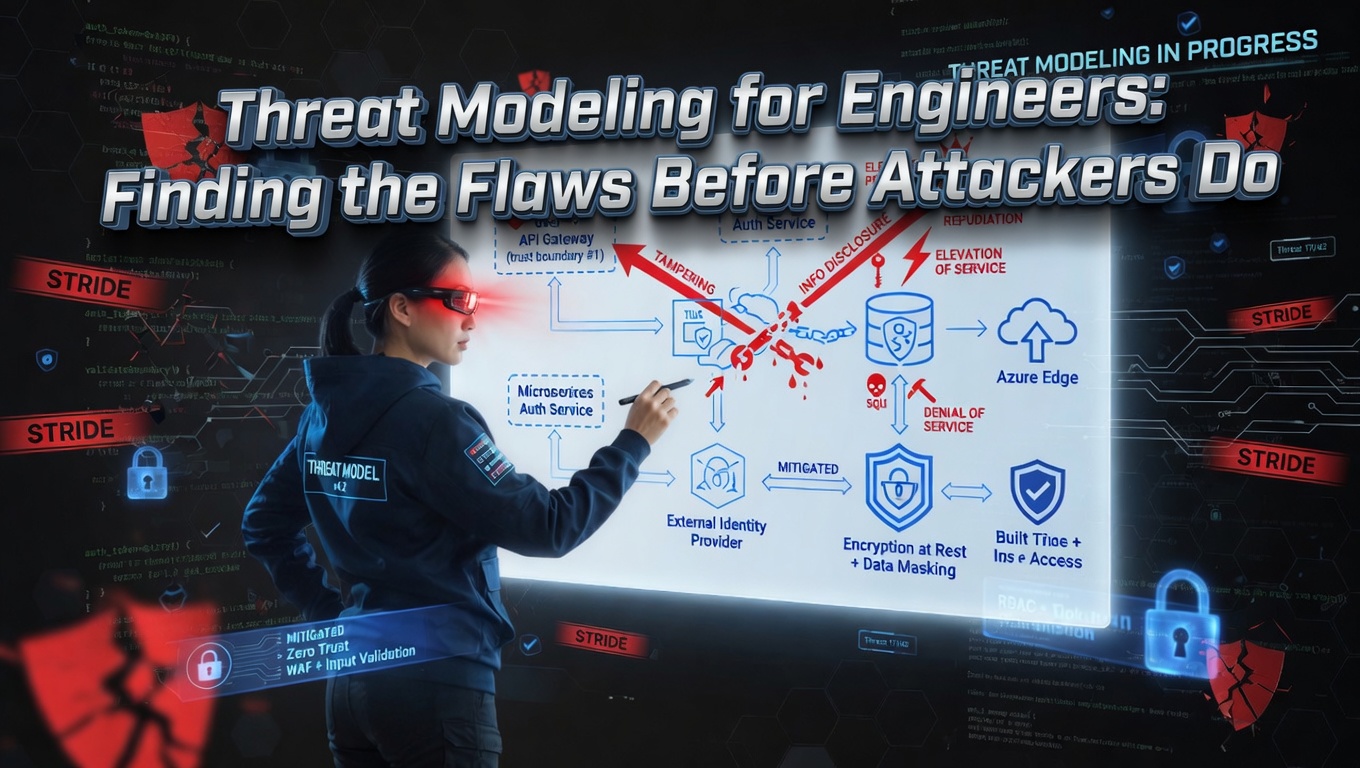
Threat Modeling for Engineers: Finding the Flaws Before Attackers Do
TL;DR A scanner finds bugs in code that already exists. Threat modeling finds flaws in a design before the code exists - which is the cheapest possible time to find them It is a structured conversation built around four questions: what are we building, what can go wrong, what are we going to do about it, and did we do a good job STRIDE gives you a vocabulary for “what can go wrong”: Spoofing, Tampering, Repudiation, Information disclosure, Denial of service, and Elevation of privilege You do not need a tool or a certificate. You need a diagram, the people who understand the system, and an hour The highest-value moment to threat model is when the design is still cheap to change - and the most common mistake is treating it as a one-off audit instead of a habit Most security work, as people experience it day to day, is reactive. A scanner flags a vulnerable dependency. A penetration test produces a report. An alert fires. Someone patches the thing, closes the ticket, and moves on. This is necessary work, but it has a structural weakness: it can only find problems in systems that already exist. By the time a scanner can see a flaw, you have already built it, shipped it, and possibly run it in production for months. ...