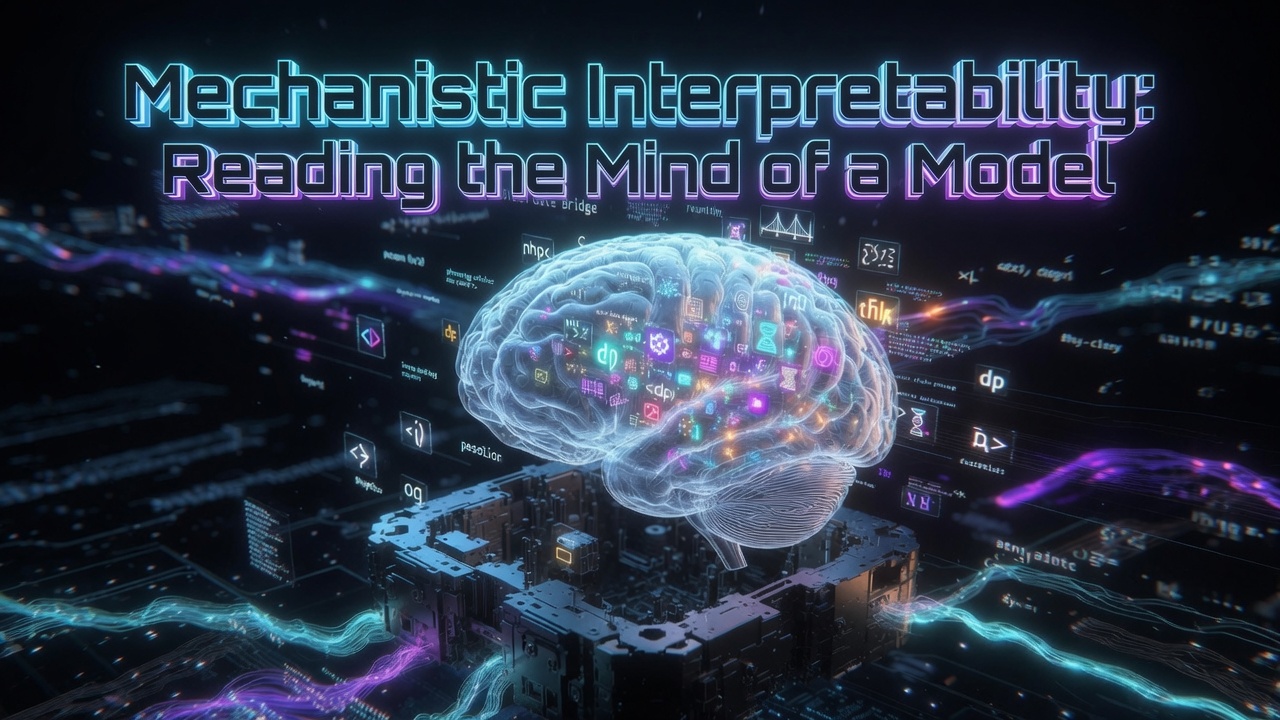
Multimodal AI in 2026 Banner

Multimodal AI in 2026: Vision + Text + Audio - What's Actually Useful

TL;DR Document understanding is the unglamorous killer application - invoices, contracts, and scanned PDFs that were painful to extract data from are now tractable without dedicated pipelines Vision models still under-deliver on precise spatial reasoning, object counting, and subtle medical or scientific imagery - these remain jobs for specialist models Audio is the modality with the most upside: beyond transcription, it carries tone, pace, and hesitation that text loses, enabling fault detection, emotional analysis, and richer inputs The teams getting real value treat multimodal as an invisible enabling capability within a workflow, not a feature to demo - and they verify high-stakes outputs just as they would text The right question when evaluating multimodal is not “can we use this” but “what specific user problem becomes tractable that previously was not” When the first multimodal frontier models shipped, the demos were genuinely impressive. A photo of a fridge interior with the model suggesting a recipe. A handwritten napkin sketch becoming working code. A short audio clip of a meeting being transcribed, summarised, and structured. It looked, briefly, like the boundary between modalities had collapsed and we were entering a new regime in which models could reason fluidly across text, images, and sound. ...

May 9, 2026 · 10 min · James M
Prompt Caching Banner

Prompt Caching: The Quiet Performance Win for LLM Applications

TL;DR Prompt caching saves the computed representation of a prompt’s static prefix so subsequent requests reuse it rather than recompute it - cached tokens cost roughly 10% of normal input token prices The savings are highest when prompts have a long, identical prefix across requests - system prompts, tool definitions, and few-shot examples can make up 80-90% of total input cost The most common mistake is interpolating variables into the system prompt, which breaks caching silently; fix it by moving all static content to the top and dynamic content to the end Cache lifetimes are bounded (minutes to a few hours per provider) and any change to the prefix - including whitespace - creates a new cache miss Track your cache hit rate explicitly on every LLM dashboard; a dropping hit rate usually signals unintended prompt construction changes, and fixing it is the highest-leverage cost optimisation available If you build LLM applications for any length of time, you eventually notice that you are paying to have the model read the same instructions over and over again. The system prompt, the tool definitions, the few-shot examples, the structured output schema - all of it goes back into the model on every single request, and you pay for the input tokens every single time. For a chatbot doing one or two thousand requests a day this is annoying. For an agent doing tens of thousands of requests with long contexts, it is the dominant cost line. ...

May 9, 2026 · 10 min · James M
AI Agents That Actually Work Banner

AI Agents That Actually Work: Patterns From Real Projects

TL;DR Most agent demos fail in production because demos operate in a regime where the model’s natural behaviour is good enough - production is longer, messier, and largely unobserved Eight patterns separate agents that stay shipped from the ones that fall over: scope the loop, structured tool design, mandatory verification, curated context, first-class human handoff, idempotency, agent-level observability, and real evaluation infrastructure Models confabulate actions - “I ran the tests” does not mean the tests were run; every agent needs explicit verification baked into the control flow, not bolted on as an afterthought The tool layer between the model and underlying systems is where most of the engineering effort actually lives, and exposing raw APIs directly to the agent almost always goes wrong Build agents the same way you would build any other long-running, partially-autonomous system you cannot afford to have fail silently - the novelty is in the failure modes, not the engineering principles I have spent the last eighteen months either building, reviewing, or operating systems that some marketing department somewhere has called “agents”. The definition has been so thoroughly stretched that it now means anything from a chatbot with a calculator tool to a long-running autonomous workflow that touches production infrastructure. Underneath the noise there is a real engineering discipline emerging, and the patterns that separate the systems that survive contact with real users from the ones that demo well and fall over are starting to be legible. ...

May 1, 2026 · 11 min · James M
AI Safety From First Principles Banner

AI Safety From First Principles: What Actually Matters vs What's Hype

TL;DR “AI safety” covers four distinct layers - product safety, system safety, model alignment, and civilisational safety - and conflating them produces incoherent debates For engineers building production systems today, system safety dominates: most real incidents trace back to flawed system design around the model, not the model itself Practical mitigations are unglamorous: scope tool permissions, bound blast radius, require human approval for irreversible actions, validate outputs, and observe everything The hype conflates capability with intent, existential risk with ordinary risk, and refusal with safety - all three conflations make the conversation harder to act on The load-bearing principle across all four layers is the same: a system should fail in ways that are detectable, recoverable, and bounded The AI safety conversation has reached the point where the phrase has stopped meaning anything specific. In the same week, you will see “AI safety” used to describe content moderation on a chat product, the alignment of frontier models toward human values, the question of whether superintelligence ends civilisation, and a regulatory paper about copyright. These are not the same problem. Treating them as one conversation is the reason the conversation never resolves. ...

April 30, 2026 · 9 min · James M
When to Fine-Tune vs When to RAG Banner

When to Fine-Tune vs When to RAG: Choosing Your AI Architecture

TL;DR The default choice for most teams should be RAG - it is reversible in days, whereas a bad fine-tuning decision is an expensive sunk cost that requires retraining to fix RAG fails when the question requires reasoning across an entire knowledge domain rather than extracting a specific answer from a passage; fine-tuning handles that case better Fine-tuning fails silently when underlying facts change - it produces confidently wrong, stale answers with no warning; RAG automatically picks up changes at query time A practical decision framework: use RAG for volatile facts and cited answers, use fine-tuning for stable style, voice, and cross-domain reasoning The best production systems use both: a fine-tuned base model for stable domain knowledge, augmented with retrieval for current and specific information The question I get asked most often by engineers starting to build with language models is some variation of: “should we fine-tune or should we do RAG?” It is almost always the wrong question, but it is the wrong question in an instructive way. The reason it gets asked so much is that the choice feels architectural, and architectural choices feel like the kind of thing you commit to once and live with. In practice, the choice is closer to “should I use a database or a cache” - the answer is usually some of both, applied to different problems, and the ratio shifts as the system matures. ...

April 29, 2026 · 11 min · James M
AI Hallucinations Understanding and Mitigating False Outputs Banner

AI Hallucinations: Understanding and Mitigating False Outputs

TL;DR AI hallucinations are not perceptual errors - they are confident pattern completions that happen to be unanchored in the world, and no model will ever stop producing them entirely because truth is not what the training objective optimises for Hallucinations cluster into five distinct types: factual, citation, code and API, instruction (claiming to have done something it did not), and reasoning - each with a different root cause and a different mitigation The mitigations that genuinely move the dial are structural: retrieval-augmented generation, tool use over recall, constrained structured outputs, explicit verification layers, and lower temperature for factual tasks The model is not the product; the model surrounded by retrieval, verification, structured outputs, calibration, and human-in-the-loop review is the product Hallucination is not the bug - the absence of a system around the model is the bug, and treating it as an engineering problem rather than a model problem is what separates demos from production The word “hallucination” is one of the most successful pieces of accidental marketing in our industry. It is a soft, almost endearing way to describe an LLM stating with full confidence that a function exists when it does not, that a court case was decided when it was not, that a paper was written by an author who has never published in that field. It makes the failure sound like a quirk rather than the central reliability problem of the entire technology. ...

April 28, 2026 · 13 min · James M

AI Reliability Is Weird: Why Testing LLMs Breaks Everything You Know

TL;DR Traditional testing assumes determinism - given input X, function f always returns Y - but LLMs are non-deterministic, which breaks assertion-based testing at its foundation The same agentic task run twice may produce different but equally correct code, making exact-output assertions brittle and often useless The new paradigm shifts from “test the code” to “verify the intent”: property-based testing, LLM-as-a-Judge evaluation, golden datasets for regression, and human review for overall correctness Structured outputs enforce syntactic correctness at generation time, but semantic correctness - whether the output actually solves the right problem - still requires layered verification on top The future of AI quality assurance is designing robust evaluation frameworks and measuring properties of acceptable outputs, not writing exhaustive unit tests for code the model may generate differently next time We’ve embraced the future. AI agents like Cline are now the primary “builders” of software, executing complex engineering plans from high-level specifications. As I’ve argued in “The Architect vs The Builder”, the human role is shifting from execution to architectural oversight and defining intent. The patterns that determine whether agents stay shipped are covered in “AI agents that actually work”, and the wider safety framing sits in “AI safety from first principles”. ...

April 9, 2026 · 7 min · James M