Four Futures: Mapping the Machine-Speed Economy
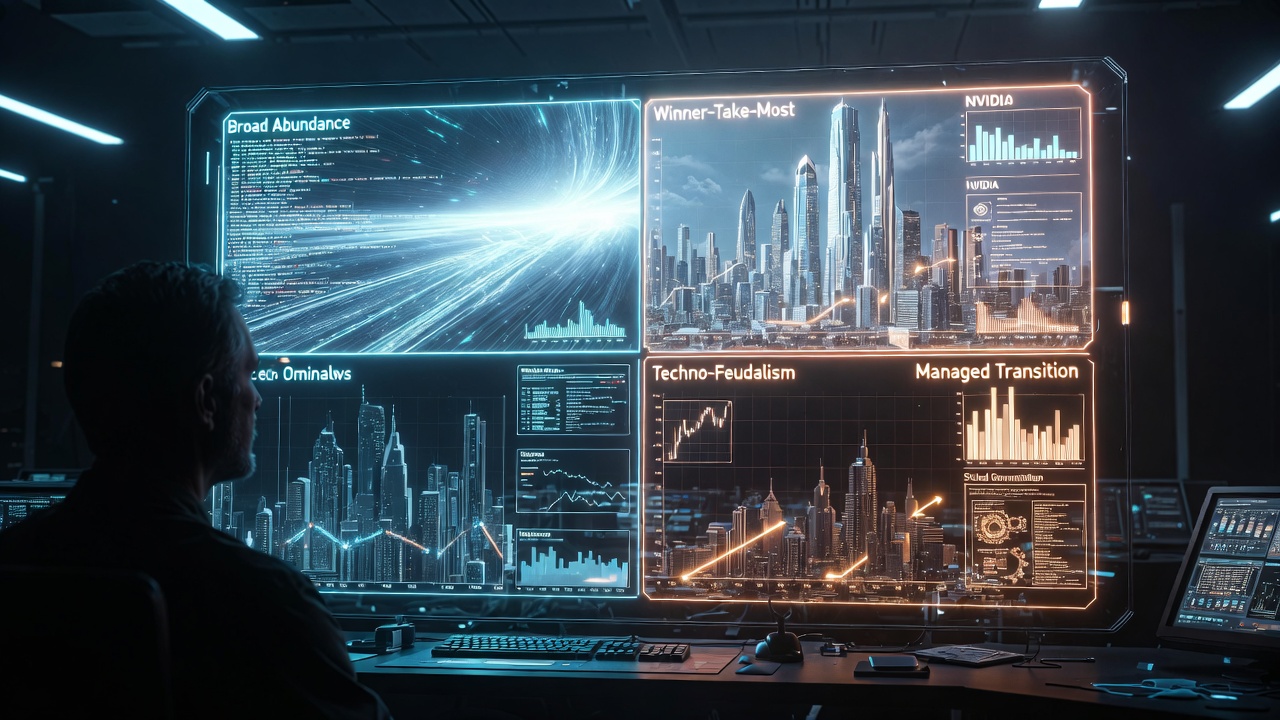
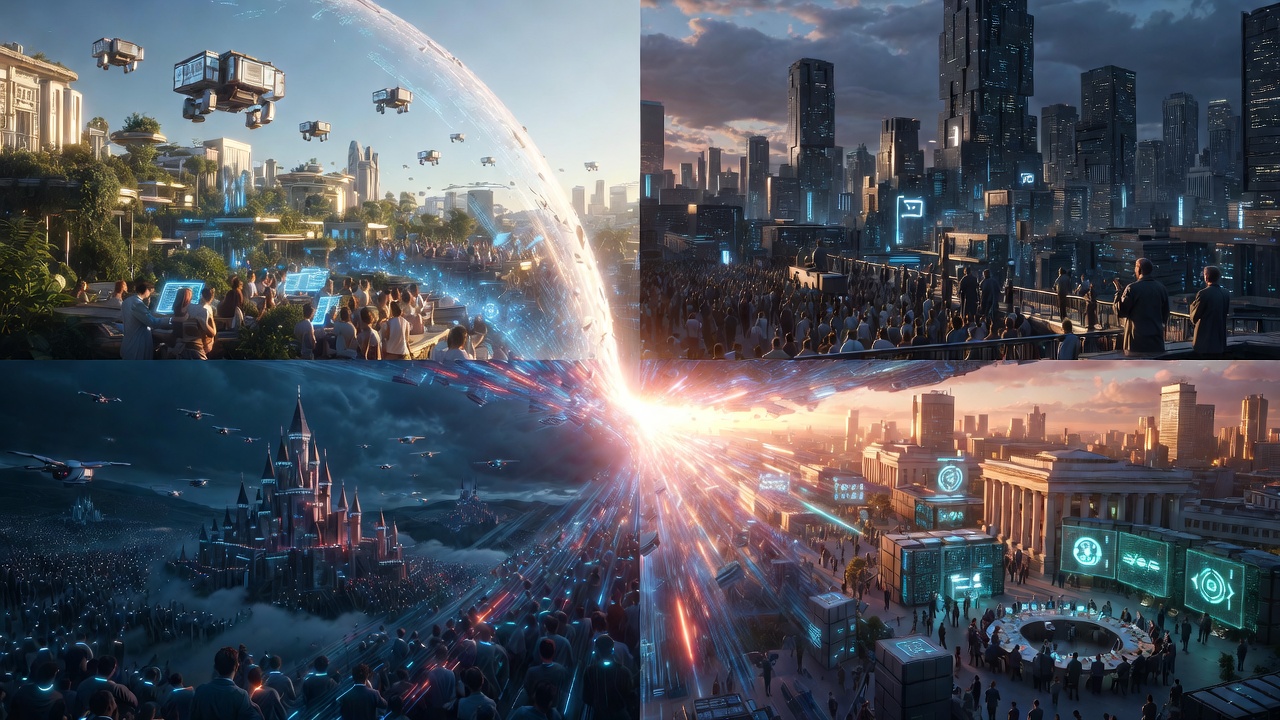
TL;DR The Four Futures series asks: as AI collapses build times and concentrates infrastructure, which economic future are we actually selecting for? Read in this order: framework → signals → century horizons Four scenarios: Broad Abundance, Winner-Take-Most, Techno-Feudalism, Managed Transition Full series index: /series/four-futures/ Start here Four Futures for the Machine-Speed Economy - the map: four plausible outcomes and what to watch for Reading the Signals: Which of the Four Futures Is Actually Emerging? - scoring real-world signals against the framework as of 2026 The Year 2126: What the Next Hundred Years Actually Looks Like - century-scale consequences if the transition goes well or badly The Year 3026: Thinking Seriously About a Thousand Years From Now - what, if anything, holds value across civilisational time Supporting reading The Free Intelligence Era: What Breaks When Thinking Costs Nothing - the abundance-side argument in detail The Automation Paradox: Why More AI Makes Human Judgment More Valuable - what stays human as machines accelerate The Meaning of Work in an Age of Abundance - what work is for when production gets cheap Policy on the AI Exponential - institutional responses and governance lag Expertise and Work in the Age of AI - how trust and accountability reshape human roles Related paths AI Economics and Hardware: A Reading Path - cost and infrastructure constraints underneath every scenario Trust: Conditions for Deploying AI Agents in Production - what has to be true before handing real work to agents Related Reading Human Advancement Is Accelerating - the longer exponential curve behind the machine-speed frame What It Means to Be an Expert in 2030 - expertise futures inside a winner-take-most world Scott Galloway on AI - one outside framing of concentration and platform power