AI dev tooling reading path

AI Dev Tooling: A Reading Path for 2026

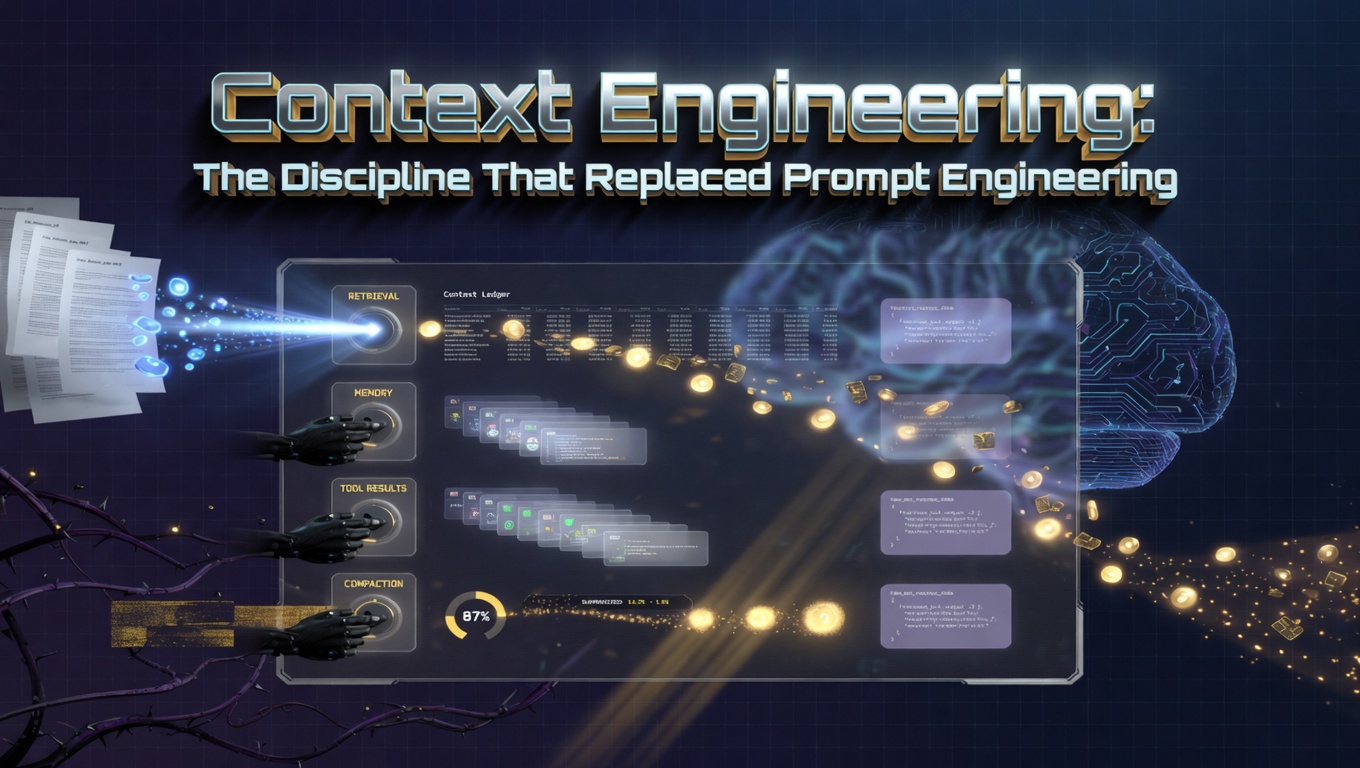
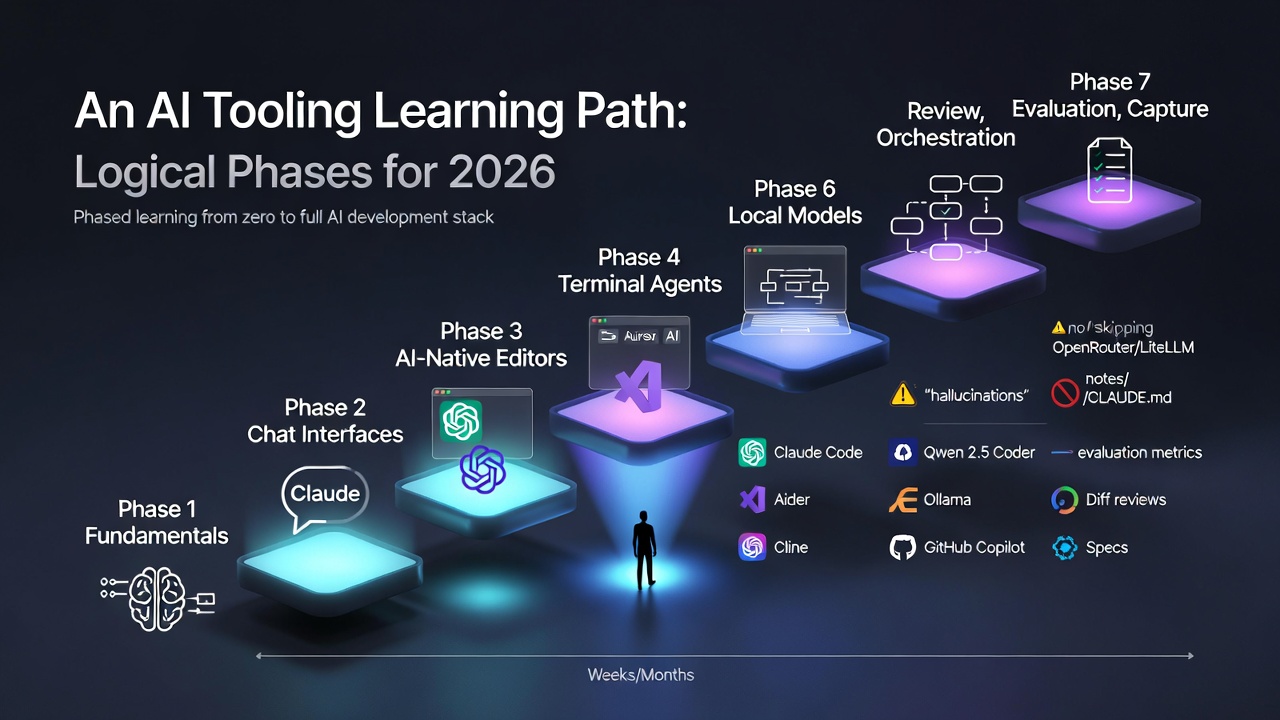
TL;DR Start with What Actually Belongs in My AI Dev Stack in 2026 - the canonical stack essay Then An AI Tooling Learning Path - phased skill-building order Deep dives below cover comparisons and spec-driven workflows; single-tool posts are briefs, not entry points Canonical essays What Actually Belongs in My AI Dev Stack in 2026 An AI Tooling Learning Path: Logical Phases for 2026 Context Engineering - the production skill behind reliable coding agents Spec-Driven Development - when the brief becomes the product Deep dives Claude Code vs Cursor: A 6-Month Comparison GitHub Spec Kit and Spec-Driven Development GitHub Spec Kit in 2026: SDD Goes Mainstream My AI-Augmented Design Workflow When to Fine-Tune vs When to RAG Briefs (moment-in-time) These are useful snapshots, not the starting point: ...

May 20, 2026 · 2 min · James M
Cursor Composer 2.5 banner

Composer 2.5: Cursor's In-House Model Grows Up

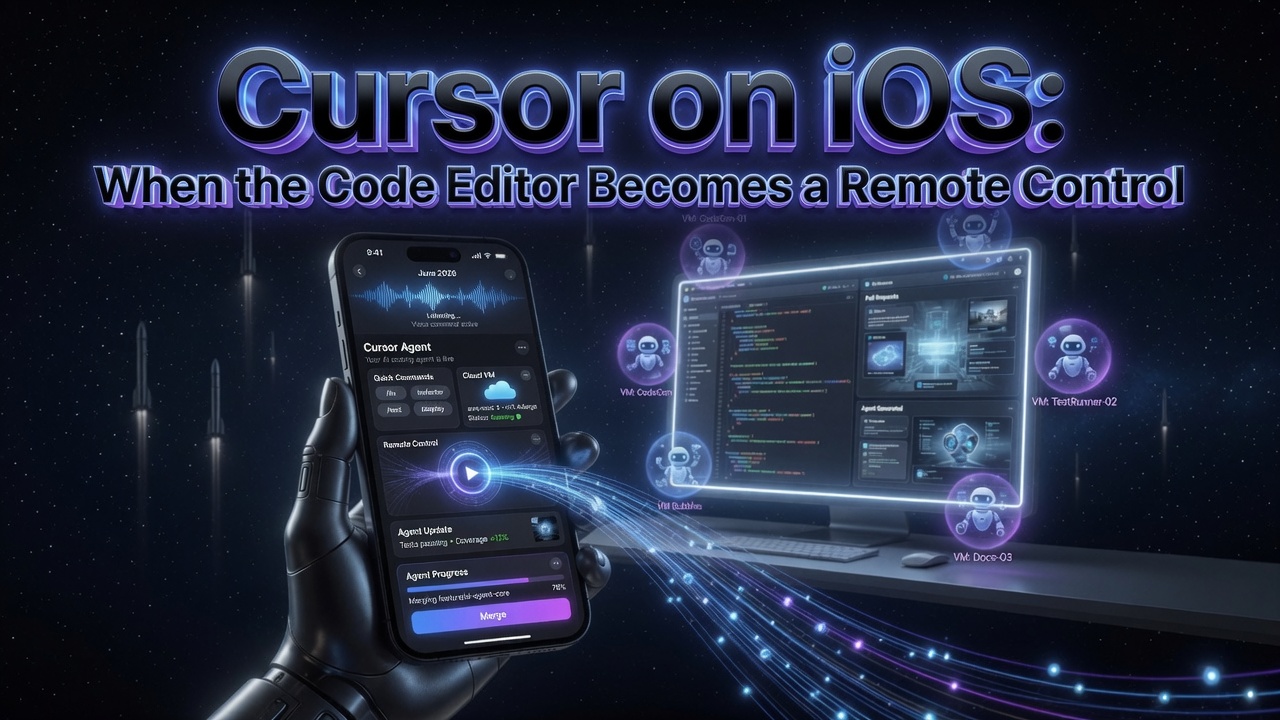
TL;DR Composer 2.5 is Cursor’s most capable in-house coding model yet, built on Moonshot’s open-source Kimi K2.5 checkpoint with about 85% of total training compute spent on Cursor’s own continued pretraining and RL The model is purpose-built for the agent loop inside Cursor - long-horizon tasks, hundreds of tool calls, multi-step instructions - rather than as a general-purpose chat model Cursor claims parity with Claude Opus 4.7 and GPT-5.5 on its own CursorBench v3.1 (63.2%) and a strong 79.8% on SWE-Bench Multilingual Pricing is dramatically lower: $0.50 / $2.50 per million input/output tokens on the default variant, with included usage doubled for the first week Together with SpaceXAI, Cursor is now training a much larger successor model from scratch on Colossus 2 with around 10x the compute - so 2.5 is a waypoint, not the endgame For a while, Cursor was an IDE wrapped around someone else’s models - Claude, GPT, Gemini. That story has shifted. With Composer 2.5, released this week, Cursor has shipped its most capable first-party coding model yet, and it is a serious enough piece of work that it deserves real consideration as a daily driver rather than a budget fallback. ...

May 18, 2026 · 8 min · James M
AI-Augmented Design Workflow Banner

My AI-Augmented Design Workflow: A 10-Minute Loop From Discussion to Documented Decision

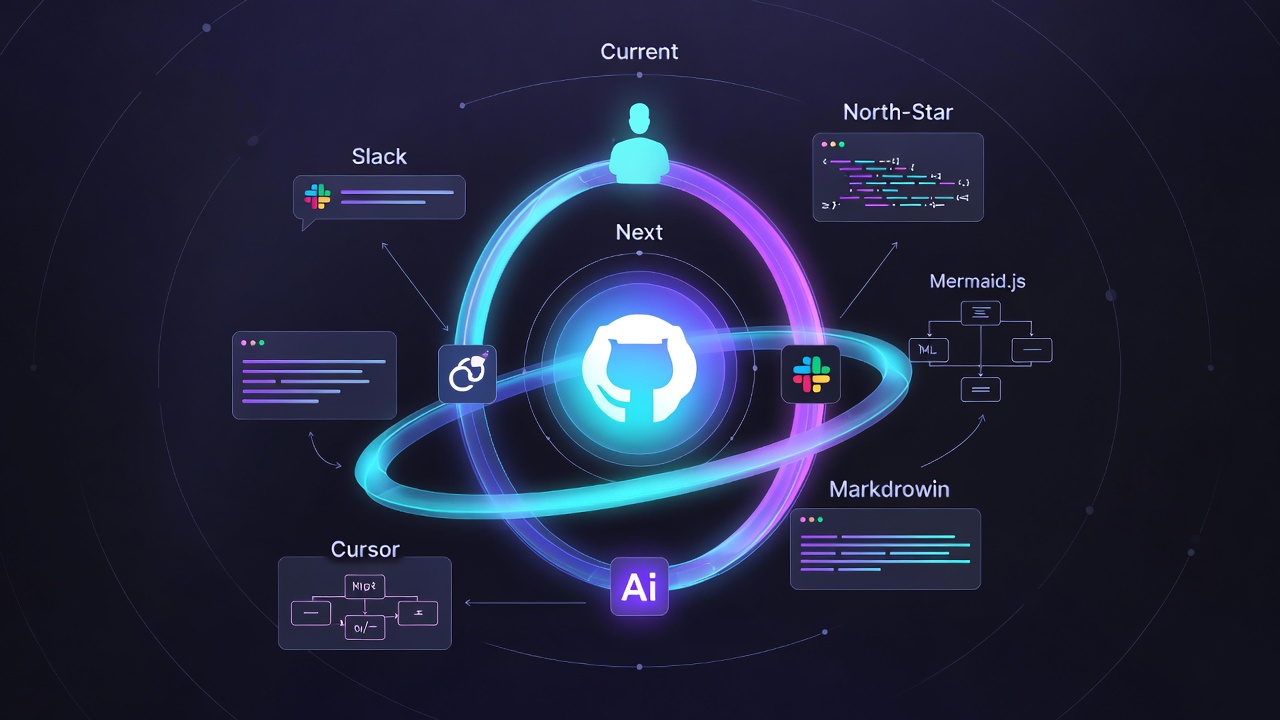
TL;DR A combination of Cursor in the IDE, Claude Code and Codex in the terminal, and GitHub Spec Kit as the living contract has collapsed the discuss-design-document loop from days to under ten minutes Every meeting is transcribed and checked into GitHub alongside the design corpus, giving AI agents access to the full historical record - not just curated decisions but the debates that shaped them Model selection matters: cheaper, faster models for throwaway sketches and small refactors; expensive models (Opus) for large cross-repo work where the cost of a wrong answer is high The real transformation is cognitive flow - removing friction between thinking and recording means decisions get made and captured while the problem is still fresh, with almost no context switching AI is now suggesting improvements faster than the author can implement them; the next bottleneck is compaction, not generation - asking the model to reduce documents to their load-bearing claims rather than produce more content Since making a combination of Cursor in the IDE and Claude Code and Codex in the terminal the centre of my working day - with ChatGPT for general questions and GitHub Spec Kit holding the design contract - the way I move from a question on Slack to a documented design decision has changed beyond recognition. ...

April 29, 2026 · 14 min · James M
Claude Code vs Cursor comparison

Claude Code vs Cursor: A 6-Month Comparison

TL;DR After six months of daily use, neither Cursor nor Claude Code wins outright - they represent two distinct philosophies that complement each other in a hybrid workflow Cursor’s strength is deep IDE integration: seamless codebase indexing, best-in-class multi-file Composer Mode, and zero context switching for feature development and UI work Claude Code’s strength is agentic execution: it runs tests, reads output, fixes code, and loops until passing - ideal for debugging, test-driven fixes, and housekeeping tasks The real winner underlying both tools is the Claude 4 family (Sonnet 4.6 for most work, Opus 4.7 for the harder agentic loops); the choice of tool determines how you interact with that intelligence, not which intelligence you get The practical split: use Cursor as your primary environment for feature work, use Claude Code when you need something to just run and fix itself It’s been six months since the landscape of AI coding tools shifted from “helpful autocomplete” to “autonomous agents.” During this time, I’ve used both Cursor and Claude Code (Anthropic’s CLI tool) for every major project. ...

April 8, 2026 · 3 min · James M
What belongs in an AI dev stack in 2026

What Actually Belongs in My AI Dev Stack in 2026

TL;DR A single AI tool cannot handle everything - a proper AI dev stack in 2026 needs distinct layers for spec writing, fast editing, heavy agentic work, cheap model tasks, review, research, and capture Spec-driven development is the most underused part: writing requirements and acceptance criteria before generation dramatically improves AI output and reduces wasted iterations Tools like Cursor AI handle fast, in-flow editing while Claude Code or Cline are better suited to multi-file refactors and autonomous implementation from specs Letting the same model that generated code also review it is a weak loop - a separate review pass with a different model or explicitly critical prompt is essential The real shift is treating AI not as a bolt-on assistant but as part of the workflow architecture itself, with each tool assigned a clear, specific responsibility There is a big difference between using AI for development and having an actual AI development stack. ...

April 5, 2026 · 9 min · James M
SpaceX Cursor Deal Banner

SpaceX Buys the Right to Buy Cursor for $60 Billion

TL;DR SpaceX has signed an option to acquire Cursor (made by Anysphere) for $60 billion, or pay $10 billion for the joint work if it walks away Cursor’s valuation has risen 24x in fifteen months - from $2.5 billion in January 2025 to a $60 billion option price in April 2026 The deal sits under SpaceX rather than xAI directly, because SpaceX holds the balance sheet after the SpaceX - xAI merger valued at $1.25 trillion For xAI, buying Cursor is a faster route to developer relevance than out-marketing OpenAI’s Codex or Anthropic’s Claude Code If the acquisition closes, three of the main AI coding interfaces will sit inside three frontier labs - raising questions about model neutrality and pricing pressure on independent tools It’s rare to see an option contract make the front page, but that is what landed on 21 April 2026. SpaceX disclosed that it has signed a deal with Cursor - the AI coding tool made by Anysphere - giving it the right to buy the startup outright for $60 billion later this year, or to walk away with a $10 billion payment for the joint work the two teams are doing in the meantime. ...

April 2, 2026 · 6 min · James M
Cursor AI spec-driven development workflow

Cursor AI, Spec-Driven Magic, and Why My Entire Development Workflow Just Leveled Up 🤯

Reading path: For the canonical stack essay, start with AI Dev Tooling and What Actually Belongs in My AI Dev Stack in 2026. TL;DR Cursor AI is an AI-native editor that reads your repo with architectural awareness, reasons across files, and turns complex refactors into simple conversations Integrating GitHub Spec Kit (spec.md, constitution.md, acceptance criteria) gives Cursor a structured foundation it treats as living, authoritative constraints The combined workflow creates a tight loop: refine the spec, ask Cursor to implement, update the spec, generate more code - documentation and code feed each other in real time Key benefits include automatic consistency between spec and code, safer large-scale refactors, and faster onboarding for new contributors These tools don’t replace developers - they eliminate friction between thought and execution, letting you think at a higher level Every so often a tool appears that doesn’t just streamline your workflow - it rewires the way you think about building software. Cursor AI has done exactly that. After years of bouncing between editors, IDEs, extensions, and automation layers, nothing has delivered the same sense of “this is the future of development” as Cursor. ...

December 3, 2025 · 3 min · James M