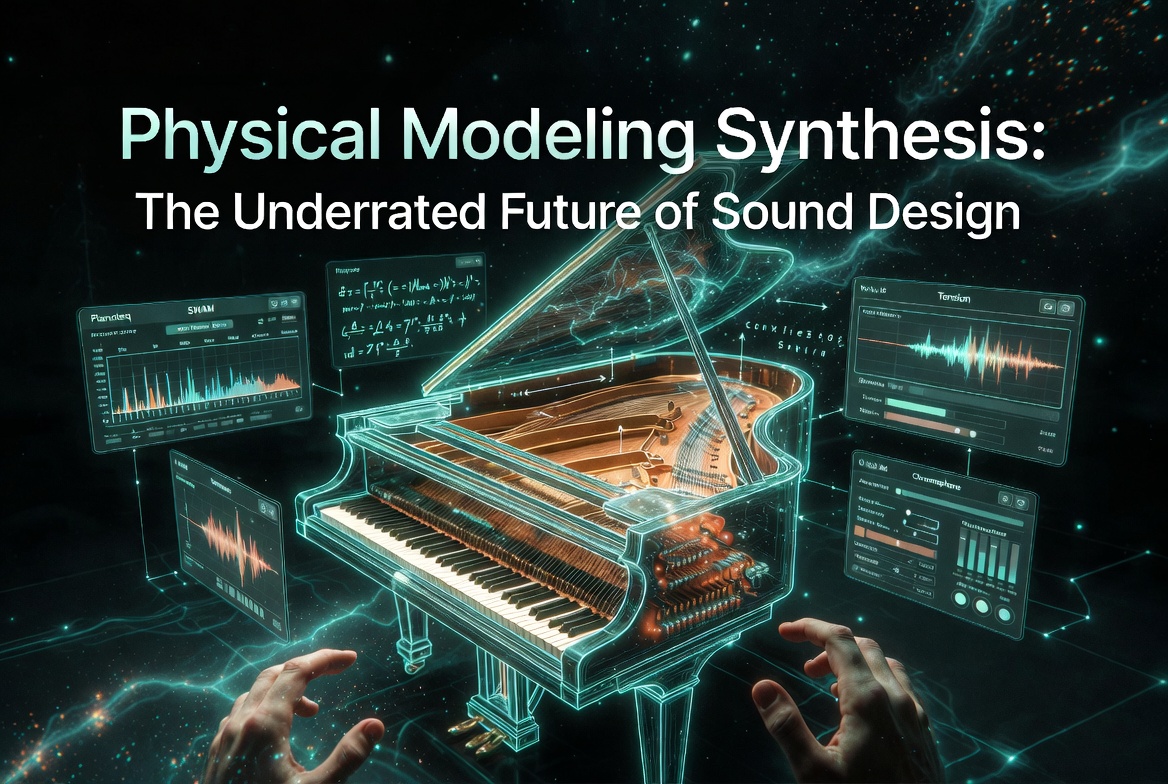
Physical Modeling Synthesis: The Underrated Future of Sound Design
TL;DR Physical modeling recreates the physics of how an instrument produces sound - string tension, resonant cavities, bowing and striking - rather than storing samples or shaping waveforms The payoff is responsiveness: modelled instruments react to how you play in ways a sample library structurally cannot The practical advantage is scale without bloat - a full modelled piano is megabytes, not the hundreds of gigabytes of a flagship sample library Pianoteq and Audio Modeling’s SWAM line lead the space in 2026, with the main barrier to adoption being that modelled instruments must be played, not just triggered My take: as processing power keeps rising and expressive controllers spread, physical modeling is where expressive digital instruments are heading If you’ve spent any time with Pianoteq or the Audio Modeling SWAM instruments, you’ve felt something different. Not the crisp accuracy of a sampled library, not the flexibility of wavetable synthesis - but something that responds like an instrument. Strings that vibrate with sympathetic resonance. Piano keys with wooden resistance. A cello that sings differently when you bow it hard versus soft. ...