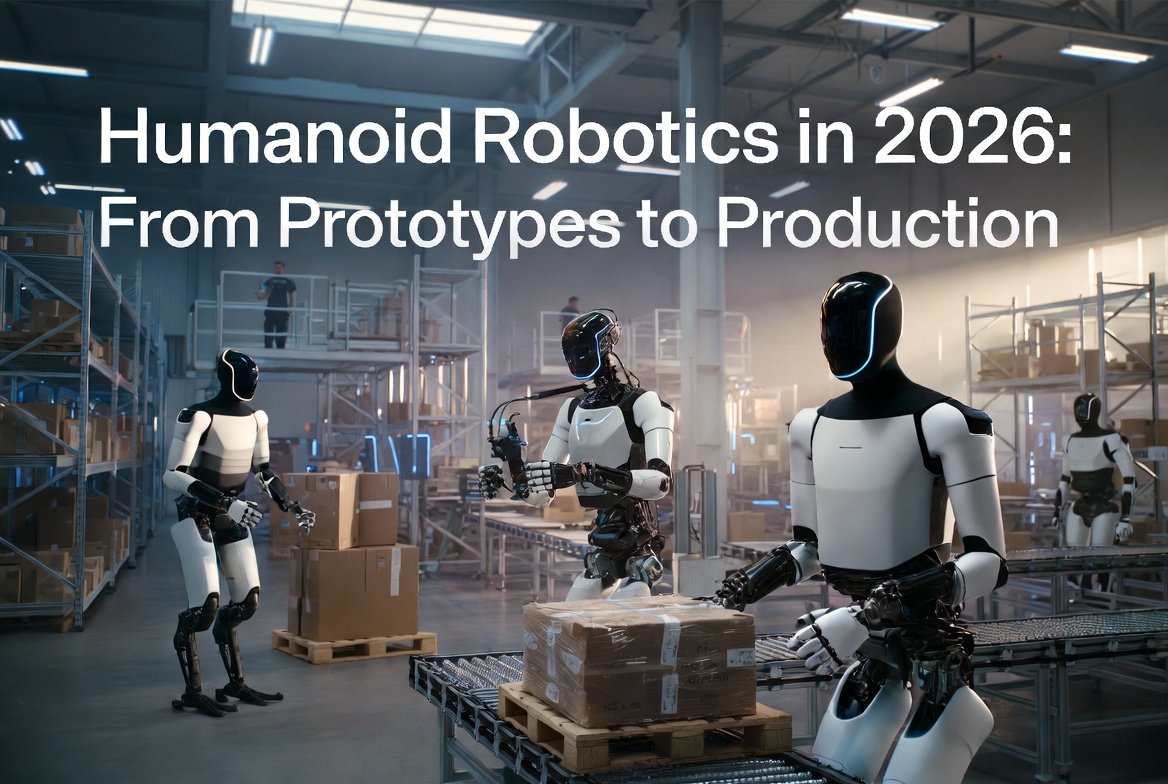
Humanoid Robotics in 2026: From Prototypes to Production
TL;DR 2026 is the inflection point for humanoid robotics - real customers like BMW, GXO, and Mercedes-Benz are paying for deployments, not just watching demos Hardware is no longer the bottleneck; the constraints have shifted to physical training data, unstructured-task autonomy, and production supply chains The economics work today for two-to-three shift warehouse operations via Robots-as-a-Service contracts at roughly USD 30-50K per year Production volumes still lag announcements by 3-5x - Unitree is likely the 2026 volume leader, not Tesla or Figure The form factor wins where environments are human-shaped and mixed-use; wheeled robots remain cheaper in purpose-built facilities For most of the last decade, humanoid robotics looked like a category that would always be three years away. Demos were impressive, factory floors stayed empty, and serious analysts pointed to bipedal locomotion, dexterous manipulation, and the price of high torque-density actuators as reasons the form factor would lose to wheeled and fixed-arm systems for any real industrial work. ...