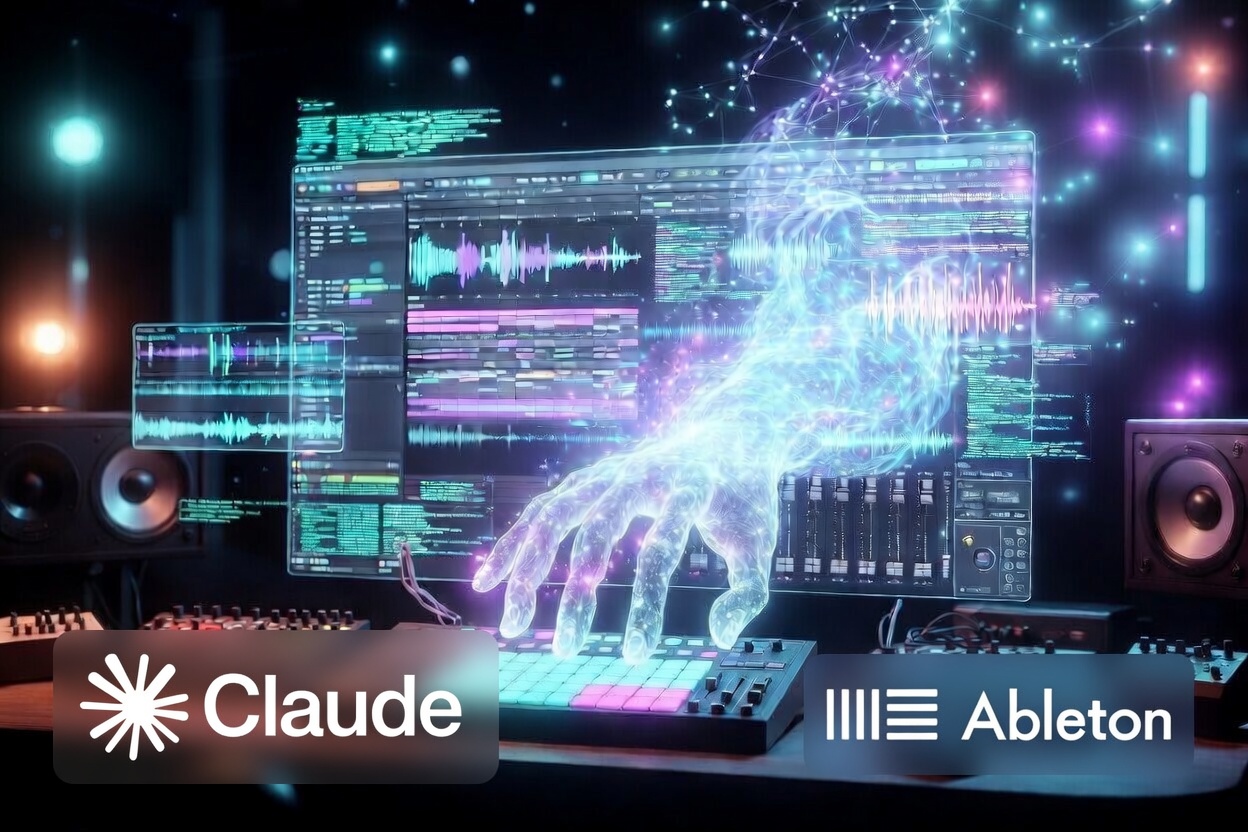
Claude connected to Ableton Live and Push

Connecting Claude to Ableton: Why the New Knowledge Connector Matters

On 28 April 2026 Anthropic shipped a batch of nine creative-tool connectors for Claude, and one of them is the Ableton Knowledge connector. It is a small thing on the surface and a big thing underneath. Here is what it does, what it does not do, and why it matters if you spend your evenings inside Live or staring at a Push. What the Connector Actually Does The official Ableton connector grounds Claude’s answers in Ableton’s own product documentation for Live and Push. That is the whole pitch, and it is more useful than it sounds. ...

April 30, 2026 · 4 min · James M
AI Skills banner

AI Skills: One Folder, Any Model

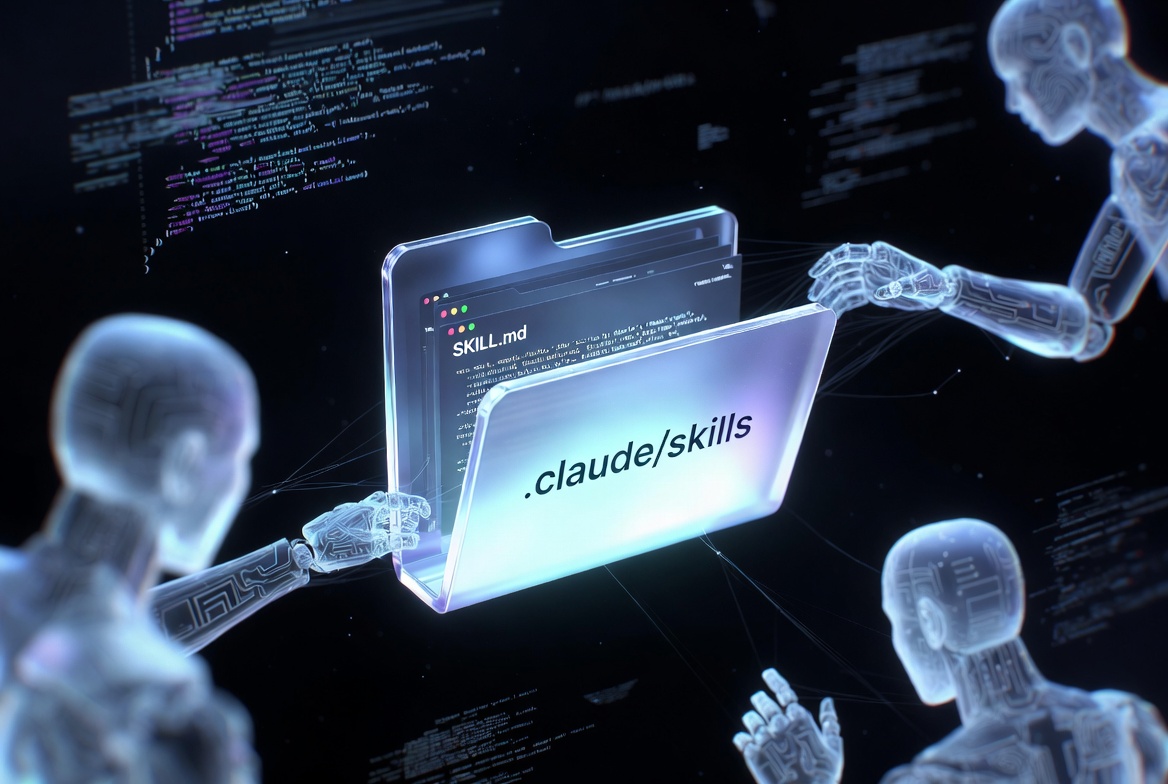
Most of the tooling I have written about over the last year has been provider-specific. A particular model, a particular harness, a particular set of features. The thing I find interesting about agent skills is that they are not. A skill is a folder. Inside the folder is a SKILL.md file with some YAML frontmatter and some markdown instructions. That is the whole format. Anthropic shipped them in Claude Code, open-sourced the spec, and at this point you can drop the same folder into Cursor, the Gemini CLI, OpenAI Codex, OpenHands, Goose, VS Code, GitHub Copilot, and a couple of dozen other tools, and they all do roughly the same thing with it. ...

April 30, 2026 · 8 min · James M
AI subscription pricing illustration

Is the $20 AI Subscription Era Over?

For the last three years, $20 a month has been the magic number. Claude Pro, ChatGPT Plus, Gemini Advanced, Copilot Pro, Cursor Pro - all twenty dollars, all clearly priced to anchor against Netflix rather than against enterprise software. That anchor is cracking. The labs are burning cash on inference for power users, the frontier models cost more per token than they did a year ago, and agent tools like Claude Code and Codex are consuming ten to a hundred times the compute a chat session does. Something has to give. ...

April 23, 2026 · 9 min · James M
Home AI Agent Memory That Lasts Banner

Giving Your Home AI Agent Memory That Lasts

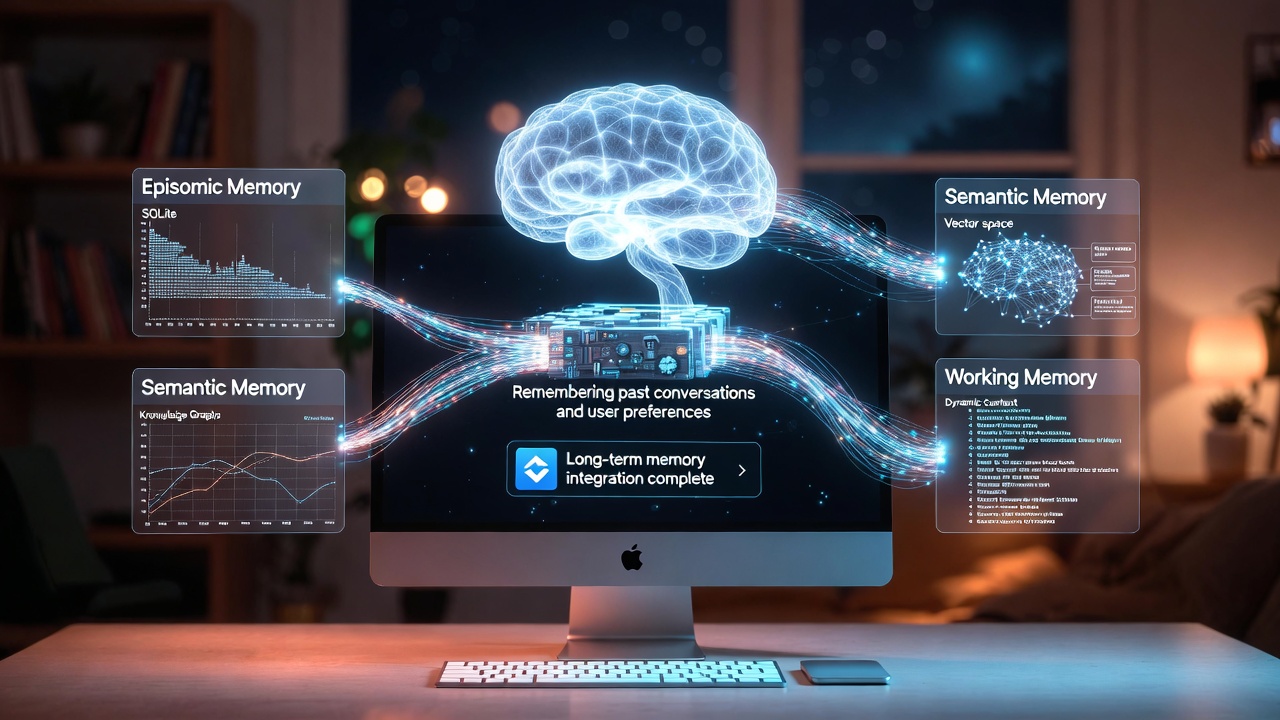
TL;DR Problem: a home agent with tools but no memory is a very well-read goldfish. Every morning it re-meets you. Answer: split memory into three layers - working, episodic, and semantic - and give each layer its own store and its own rules for what gets written. Where it lives: SQLite for episodic and facts, a local vector store for semantic search, and a tiny policy file that decides what is worth remembering in the first place. How it plugs in: a memory MCP server that exposes recall, remember, and forget - nothing else. Result: the agent can say “last Tuesday we tried restarting the Postgres container and it worked” and mean it. It also knows what not to store. The Goldfish Problem The home agent I built over the last few weeks can do real things now. It can read my mail, move files around my workspace, turn lights off, and check my calendar. What it could not do, until this week, was remember any of it. ...

April 22, 2026 · 9 min · James M
MCP Servers for a Home AI Agent Banner

Giving Your Home AI Agent Real Tools: MCP Servers on a Mac Studio

TL;DR Problem: a local agent that can only chat is a toy. The value is in what it can do. Answer: Model Context Protocol servers, running locally on the Mac Studio, expose filesystem, calendar, mail, notes, and a handful of custom tools. Runtime: one supervisord config, a small router, and per-server allowlists so nothing escapes its box. Security posture: no tool runs without a policy, secrets live in the macOS Keychain, and every call is logged to a local SQLite file I can grep at 11pm. Result: I can phone the agent (see How to Phone Your Home AI Agent), ask “move the CI failure email to triage and put a 15 minute hold on my calendar at 4”, and it actually does it. Why MCP and Not “Just Functions” Before MCP I had a directory of half-finished Python shims. Each one spoke a slightly different dialect: one took JSON arguments, one took positional args, one returned markdown and one returned a dict. Adding a new tool meant editing the agent prompt, the router, and the caller. ...

April 22, 2026 · 8 min · James M
Claude Opus 4.7 on Databricks Banner

Claude Opus 4.7 Lands on Databricks: Enterprise Reasoning Meets the Lakehouse

Databricks announced this week that Anthropic’s Claude Opus 4.7 is now live on the platform. The headline from Databricks’ own benchmarking is the part worth pausing on - 21% fewer errors than Opus 4.6 on the OfficeQA Pro document-reasoning benchmark when the model is grounded in source information. That single number tells you more about where enterprise AI is going than any launch keynote. Why This Matters More Than Another Model Announcement Most Claude releases get surfaced the same week across the API, Amazon Bedrock, Google Cloud’s Vertex AI, and Microsoft Foundry. That was true of Opus 4.7 on April 16 as well. The Databricks story is different because Databricks is not just another hosting destination - it is where the actual enterprise data lives. ...

April 20, 2026 · 7 min · James M
Token efficiency visualization

The Token Efficiency Mindset - Why Your Claude Conversations Cost More Than They Should

If you’re paying attention to your Claude usage, you’ve probably noticed something: your token bills don’t scale linearly with your productivity. Sometimes a conversation that feels quick costs three times more than expected. Other conversations that took hours feel suspiciously cheap. The difference isn’t randomness. It’s a mental model problem. The Problem With “Just Ask” Most people treat Claude like a search engine with a long context window. You dump information, ask a question, wait for an answer. If you don’t like it, you ask again. Iterate until satisfied. ...

April 17, 2026 · 6 min · James M
Claude Design Icon

Claude Design: Closing the Design-to-Code Gap

Design-to-development handoff has always been a friction point. Designers create something beautiful. Engineers interpret Figma specs, argue about spacing, squint at color values. SVG assets get lost. Responsive behavior gets reimplemented. By the time the code matches the design, half the polish is gone. Claude Design, Anthropic’s new design collaboration tool, attacks this problem directly. Instead of designers creating static files that engineers have to decode, Claude Design lets both sides work in the same tool - with Claude as the bridge. ...

April 17, 2026 · 4 min · James M
Claude Opus Icon

Claude Opus 4.7: Autonomy and Vision at Scale

Opus 4.7 is a meaningful step forward. Not a revolutionary rewrite, but a targeted upgrade that addresses friction points developers actually experience: vision quality, autonomous task handling, and creative output. The headline feature is deceptively simple - images up to 2,576 pixels. That’s 3.75 megapixels, roughly three times the previous limit. In practice, this means Claude can now read a dense screenshot without losing details, extract data from complex charts without ambiguity, and handle UI testing images that show real context instead of cropped fragments. ...

April 16, 2026 · 5 min · James M

Career-Ops: Flipping the Script on AI-Powered Job Search

The job search has long been a one-way mirror - companies deploy AI to filter applications while candidates manually juggle spreadsheets, tailor cover letters, and hope their resume gets past the automated screener. Career-Ops flips that script entirely. Built on Claude Code, it’s an open-source system that gives job seekers their own AI advantage: intelligent evaluation of opportunities, automated customized applications, and systematic candidate strategy. The Problem It Solves The traditional job search is a grind of low-signal noise. You find 30 job postings. You read them. You customize a resume. You write a cover letter. You track applications in a spreadsheet. You wait. You compare offers using gut feel and spotty spreadsheet columns. The process burns time and attention - exactly when you need both to think clearly about your career. ...

April 9, 2026 · 4 min · James M