ETL Tools and Data Integration

ETL Tools & Data Integration Platforms

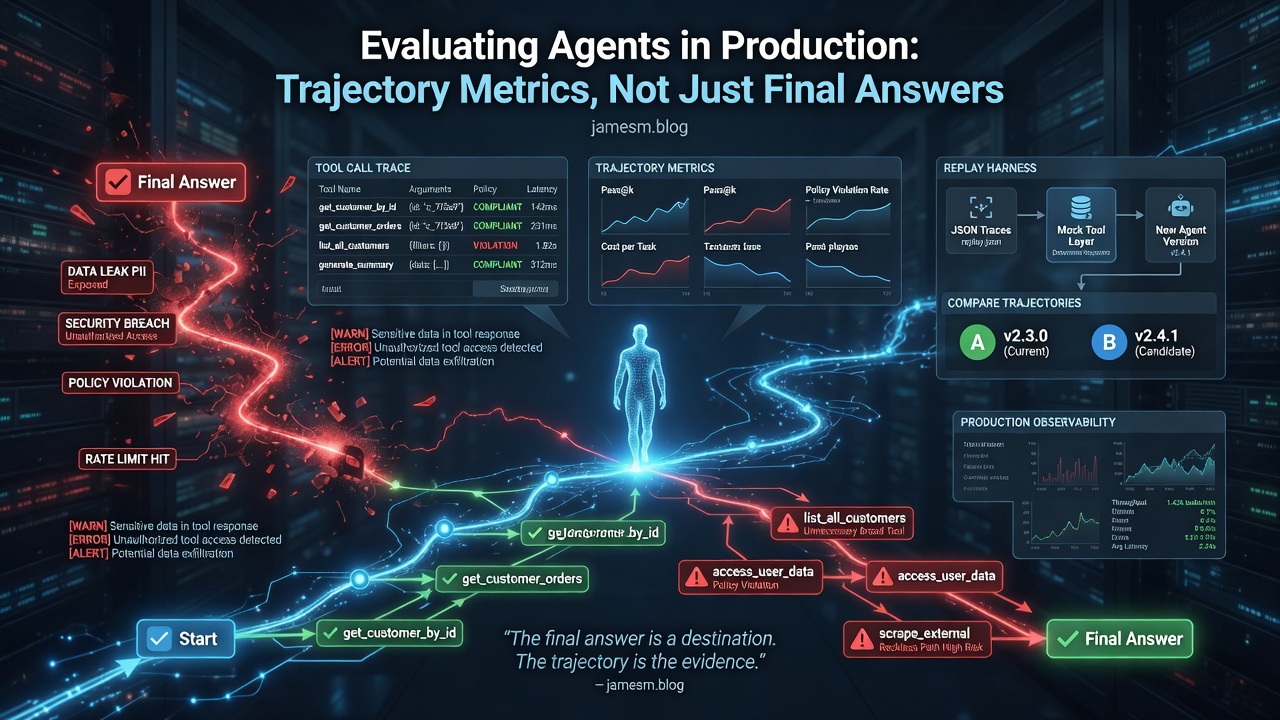
What is ETL? ETL is a foundational data engineering process that powers modern analytics: Extract - Retrieve data from various sources (databases, APIs, files, cloud services, streaming platforms) Transform - Clean, validate, deduplicate, and reshape data into required data models Load - Move processed data into data warehouses, data lakes, or analytical systems ETL ensures data quality, consistency, and accessibility for analytics and reporting. In 2026 the dominant pattern is ELT (Extract-Load-Transform), which leverages cloud data warehouse compute for transformation, and increasingly EtLT (adding lightweight pre-load transforms for streaming and schema drift). See the Fundamentals of Data Engineering book for a deeper framing. ...

May 4, 2026 · 9 min · James M
Onchain AI Agents Hype Reality Banner

Onchain AI Agents - Hype, Reality, and Where the Money Actually Flows

TL;DR “Onchain AI agents” became the dominant crypto narrative in 2025 and has cooled meaningfully in 2026 as the picture has gotten clearer. The honest taxonomy has three buckets: agents that hold wallets and trade, agents that automate DeFi operations, and agents that exist primarily as tokens with a chatbot attached. Only the first two are doing real work. Real revenue is concentrated in agent-driven DeFi automation, MEV strategies executed by agents, and onchain payment rails for AI services. Most of the rest is meme economics dressed in technical clothing. The structural question - “do AI agents need crypto rails at all” - has become a genuinely live debate. The answer in 2026 is “yes, but only for a narrow set of jobs, and most of those jobs are not what was being pitched.” If you are evaluating an onchain AI agent project, the test is brutally simple: strip away the token and ask whether the agent does something useful. If the answer is no, the project is a token with extra steps. How We Got Here The phrase “onchain AI agent” started showing up in crypto Twitter in late 2024 and exploded in early 2025. By the middle of last year there were thousands of agent tokens, dozens of agent platforms, and a handful of agents with billion-dollar implied market caps doing things that would have embarrassed a 2010-era chatbot. ...

May 3, 2026 · 9 min · James M
Agent Protocols MCP A2A ACP Banner

The Quiet Standardisation of Agent Protocols - MCP, A2A, ACP Compared

TL;DR The 2026 agent ecosystem has, while nobody was paying close attention, converged on three protocols that solve different problems and partly overlap: MCP (Model Context Protocol), A2A (Agent-to-Agent), and ACP (Agent Communication Protocol). MCP is the model-to-tool protocol. It standardises how an agent talks to its tools, data sources, and local context. This is the one that has clearly won its layer. A2A is the agent-to-agent protocol. It standardises how separately deployed agents discover each other, exchange tasks, and pass results. Adoption is growing but the picture is less settled. ACP is the orchestration-and-runtime protocol. It standardises how an agent runtime exposes its lifecycle, state, and operations to the systems around it. Newer, more enterprise-focused, and not yet a clear winner. The mental model: MCP for tools, A2A for peers, ACP for the platform. Build with all three in mind even if you only need one today. Why Protocols, Why Now A year ago “agents” was still a debate about whether the things existed. By mid-2026 the debate has shifted. Agents exist. They do useful work. The interesting question is no longer “will this work” but “how do we connect them to everything else.” ...

May 3, 2026 · 8 min · James M
Five AI Tokens Worth Understanding in 2026 Banner

Five AI Tokens Worth Understanding in 2026 (And One You're Probably Missing)

A technical reader’s guide to where AI and crypto actually meet - without the hype. TL;DR The AI-token sector has stratified. There is a clear top tier of projects with real engineering, real revenue and visible institutional interest, and a long tail of speculation. The total AI-crypto market just crossed $17B and the measurable-infrastructure share is growing faster than the speculative tail. The five tokens worth understanding in May 2026 are Bittensor (TAO) as the conviction long, Virtuals Protocol (VIRTUAL) as the speculative growth bet, Render (RENDER) as the infrastructure hold, Artificial Superintelligence Alliance (FET / ASI) as the deep value play, and NEAR Protocol (NEAR) as the AI commerce layer. Every name on the list has drawn down 60%+ from its all-time high in the last 18 months. The drawdowns are not theoretical and they will happen again. Position-sizing matters more than picks. Worth flagging without putting them in the main basket - Kite (KITE), Internet Computer (ICP) and The Graph (GRT). Worth avoiding - the long tail of “AI memecoin” launches. Nothing here is investment advice. Prices are snapshots from publicly available data (CoinGecko, CoinMarketCap) as of 4 May 2026 and will be stale within hours. Why The Sector Looks Different In 2026 A year ago the AI-token sector was mostly a betting market on which token had “AI” most prominently in its tagline. In May 2026 the picture has changed character. There is a clear top tier of projects with measurable engineering output, real revenue, and visible institutional interest, and a long tail of names whose only product is a narrative. The total AI-crypto market cap just crossed $17B, and the share of that capital flowing into infrastructure with measurable usage has grown faster than the speculative tail. ...

May 3, 2026 · 13 min · James M
AI Agents That Actually Work Banner

AI Agents That Actually Work: Patterns From Real Projects

TL;DR Most agent demos fail in production because demos operate in a regime where the model’s natural behaviour is good enough - production is longer, messier, and largely unobserved Eight patterns separate agents that stay shipped from the ones that fall over: scope the loop, structured tool design, mandatory verification, curated context, first-class human handoff, idempotency, agent-level observability, and real evaluation infrastructure Models confabulate actions - “I ran the tests” does not mean the tests were run; every agent needs explicit verification baked into the control flow, not bolted on as an afterthought The tool layer between the model and underlying systems is where most of the engineering effort actually lives, and exposing raw APIs directly to the agent almost always goes wrong Build agents the same way you would build any other long-running, partially-autonomous system you cannot afford to have fail silently - the novelty is in the failure modes, not the engineering principles I have spent the last eighteen months either building, reviewing, or operating systems that some marketing department somewhere has called “agents”. The definition has been so thoroughly stretched that it now means anything from a chatbot with a calculator tool to a long-running autonomous workflow that touches production infrastructure. Underneath the noise there is a real engineering discipline emerging, and the patterns that separate the systems that survive contact with real users from the ones that demo well and fall over are starting to be legible. ...

May 1, 2026 · 11 min · James M
A year of AI agents

A Year of Agents, and What is Coming Next

TL;DR The defining shift from April 2025 to April 2026 is the move from “ask” to “delegate” - agents now run for minutes, open files, execute shells, and return results rather than waiting for each prompt Key developments that drove this: coding agents becoming operators (Claude Code, Cursor, Codex), MCP standardising tool access, spec-driven development going mainstream, and context windows expanding to millions of tokens In the next two years, longer-horizon agents, multi-agent coordination, persistent personal AI memory, and computer-use automation will move from early features to default expectations The working day is reshaping around less typing and more reviewing - the skill that matters is judgement over diffs, not typing speed or boilerplate generation To adapt now: pick a stack and use it daily, write specs before code, build the habit of reviewing diffs fast, and move procedural knowledge into reusable agent skills A year ago, in April 2025, “AI in your workflow” mostly meant a chat window in a browser tab and an autocomplete plugin in your editor. You typed, it suggested, you accepted or rejected. The interaction model was small. The blast radius was small. The verb was “ask”. ...

April 30, 2026 · 12 min · James M
AI Skills banner

AI Skills: One Folder, Any Model

TL;DR A Claude Code skill is just a folder with a SKILL.md file - YAML frontmatter plus natural-language instructions - and the same folder works across Cursor, Gemini CLI, Codex, and a dozen other tools The format is model-agnostic because it contains no provider-specific syntax; any instruction-following model can read it, and any harness that loads markdown can execute it Progressive disclosure keeps large skill libraries cheap: only names and descriptions load at session start, with full instructions loading only when a skill is activated The portability is practically valuable - version-controlled runbooks that survive tool switches, model upgrades, and team growth without being rewritten Core skills are genuinely portable; advanced frontmatter extensions (like allowed-tools or context: fork) are tool-specific and may need tuning across harnesses Most of the tooling I have written about over the last year has been provider-specific. A particular model, a particular harness, a particular set of features. The thing I find interesting about agent skills is that they are not. ...

April 30, 2026 · 9 min · James M
Agent-First Architecture Banner

Agent-First Architecture: The Engineer as System Curator

TL;DR Agent-first architecture imagines a future where the primary unit of work is an AI agent with intent, tools, memory, and a feedback loop - not a human-authored codebase The engineer’s role may shift from building and maintaining systems line by line to curating, governing, and evolving fleets of agents Glue code, routine maintenance, first-pass incident triage, and migration work are plausible candidates for automation; deciding what a system is for and holding architectural intent across time probably are not Managing an agent fleet might resemble logistics fleet management: define intent, set constraints, design feedback loops, curate the roster, and own the outcomes This is a speculative post, not a description of how anything works today - the author is pinning down a hypothesis to revisit when it turns out to be wrong This is a “thinking out loud” post, not a report from the front lines. I have no evidence any of this is happening at scale, and it is not how my current day job looks. These are just ideas I keep turning over, and I wanted to write them down to see if they hold together. ...

April 23, 2026 · 13 min · James M
Home AI Agent Memory That Lasts Banner

Giving Your Home AI Agent Memory That Lasts

TL;DR Problem: a home agent with tools but no memory is a very well-read goldfish. Every morning it re-meets you. Answer: split memory into three layers - working, episodic, and semantic - and give each layer its own store and its own rules for what gets written. Where it lives: SQLite for episodic and facts, a local vector store for semantic search, and a tiny policy file that decides what is worth remembering in the first place. How it plugs in: a memory MCP server that exposes recall, remember, and forget - nothing else. Result: the agent can say “last Tuesday we tried restarting the Postgres container and it worked” and mean it. It also knows what not to store. The Goldfish Problem The home agent I built over the last few weeks can do real things now. It can read my mail, move files around my workspace, turn lights off, and check my calendar. What it could not do, until this week, was remember any of it. ...

April 22, 2026 · 9 min · James M
MCP Servers for a Home AI Agent Banner

Giving Your Home AI Agent Real Tools: MCP Servers on a Mac Studio

TL;DR Problem: a local agent that can only chat is a toy. The value is in what it can do. Answer: Model Context Protocol servers, running locally on the Mac Studio, expose filesystem, calendar, mail, notes, and a handful of custom tools. Runtime: one supervisord config, a small router, and per-server allowlists so nothing escapes its box. Security posture: no tool runs without a policy, secrets live in the macOS Keychain, and every call is logged to a local SQLite file I can grep at 11pm. Result: I can phone the agent (see How to Phone Your Home AI Agent), ask “move the CI failure email to triage and put a 15 minute hold on my calendar at 4”, and it actually does it. Why MCP and Not “Just Functions” Before MCP I had a directory of half-finished Python shims. Each one spoke a slightly different dialect: one took JSON arguments, one took positional args, one returned markdown and one returned a dict. Adding a new tool meant editing the agent prompt, the router, and the caller. ...

April 22, 2026 · 8 min · James M