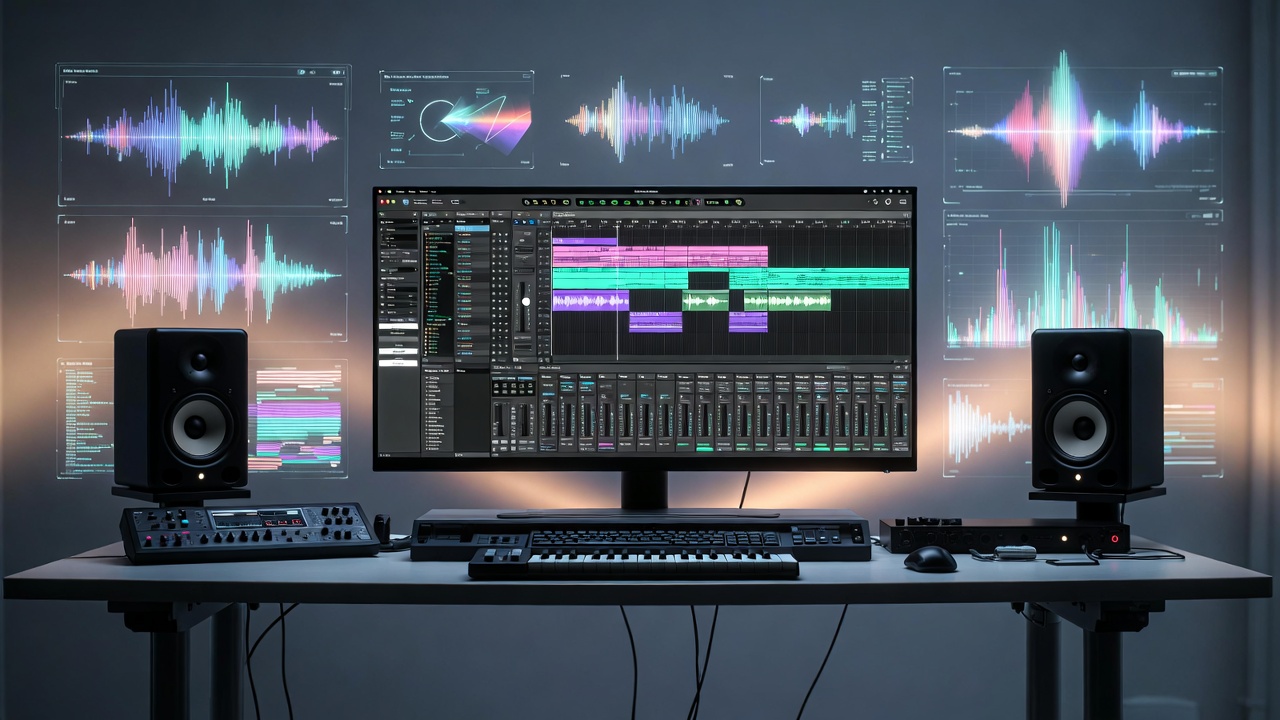
Suno has launched Suno Studio, a cloud-based platform the company is calling the first generative DAW - a digital audio workstation built around AI from the ground up. Where a traditional DAW like Ableton Live or Logic Pro treats sound as something you record, sample, or program, Suno Studio treats sound as something you can ask for in plain language and then shape on a timeline.
What it actually is
Suno Studio sits in the browser. You can prompt for a stem - a drum loop, a bassline, a vocal hook - and drop it onto a multitrack arrangement. From there you get the controls a producer expects: tempo, pitch, volume, basic effects, and the ability to slice and rearrange. Stems can be exported as audio so the project can continue in a conventional DAW if you want to mix it properly later.
The release sits on top of Suno’s v5 model, which the company describes as able to “compose like a musician and adapt like a co-writer.” CEO Mikey Shulman frames the launch as part of a wider shift where AI is a regular collaborator in the studio rather than a novelty plugin.
What it is good at
Early users consistently call out three things:
- Speed. Going from idea to a usable stem takes seconds, not the half hour it usually takes to dig through a sample library.
- Breadth. The generative library is effectively unbounded, which removes the “I have heard this loop in ten other tracks” problem.
- Iteration. Re-prompting and regenerating a part is faster than re-recording or re-programming it, so the cost of trying a different direction is low.
Where it still struggles
The same testers note that AI still does not nail very specific creative briefs. Asking for “a Rhodes part in the style of a 1973 Herbie Hancock session, but in 7/8” is the kind of request that tends to come back close-but-not-quite. For tightly defined production work, generative output is a starting point rather than a finished part. This matches the pattern across the wider AI music tools landscape.
Context: copyright and platform pressure
Suno Studio arrives during heavy industry scrutiny over training data and ownership. Spotify has rolled out new policies to label AI-generated music, and the major labels have ongoing litigation against generative music companies. None of this is unique to Suno, but it shapes the environment the product is launching into - and it is one reason the export-stems-and-finish-elsewhere workflow matters: it gives users a path that does not depend on any single platform’s terms holding still.
Pricing and access
Suno Studio is available through Suno’s $30/month Premier plan. That puts it in the same monthly bracket as a single-user subscription to a mainstream DAW or sample service, which is the comparison the company clearly wants people to make.
YouTube Videos
[2025-09-25] Suno Studio Tutorial: A Complete Beginner’s Guide (2025)
A walkthrough of Suno Studio covering track building, editing, mixing, and the workflow for turning a prompt into a finished arrangement. Useful as a first look if you want to see the interface in motion before signing up.