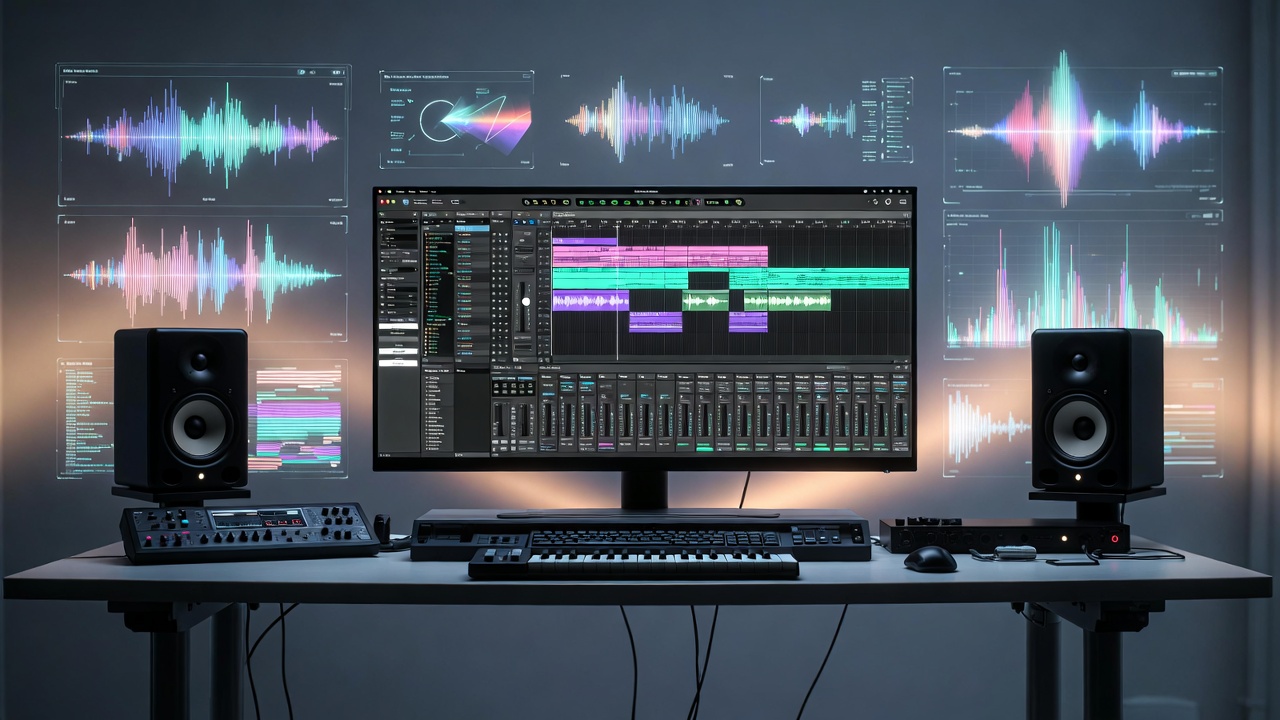
The DAW landscape in 2026 looks different to the one I wrote about last year. AI-assisted stem separation is now table stakes, generative co-writers are embedded everywhere, and the “cloud DAW” idea has finally stopped being a novelty. Whether you are sketching your first loop or mixing a full band, here is where I would start in 2026.
Ableton Live 12 - Still the Creative Sandbox
Live 12 is still the current major version in April 2026, now at 12.3 with 12.4 landing as a free update for Live 12 users. The recent releases have brought Stem Separation in Suite, Splice integration, Bounce Groups, and the new Auto Pan-Tremolo. The Session View remains unbeaten for rapid sketching and live performance, and Max for Live continues to be the quiet superpower that keeps Live feeling fresh a decade on.
Best for: electronic, experimental, live performance, anyone who treats the DAW as an instrument.
Logic Pro 12 - Apple’s All-Rounder Grows Up
Logic Pro 12 landed in January 2026 and is now at 12.2, bringing expanded Dolby Atmos preview tooling, new Sound Packs (the recent Step Reflex pack is great), and tighter parity between the macOS and iPad versions. The M-series silicon makes the stock plugins run so light you rarely reach for third-party alternatives.
Best for: songwriters, scoring, pop and rock, anyone already in the Apple ecosystem.
FL Studio - Still the Fastest Way to a Beat
FL Studio’s lifetime free updates continue to pay off. The current stable release is 25.2.5, with FL Studio 2026 now in public beta bringing chord tools with voice-leading, improved audio and instrument track management, and better Apple Silicon performance via the macOS Audio Workgroups API. If your music lives in patterns and loops, nothing else gets you from idea to finished beat faster.
Best for: hip-hop, trap, pop, EDM, beatmakers of every stripe.
Cubase 15 - The Composer’s Choice
Cubase 15 (now at 15.0.20 after the April 2026 maintenance update) leans harder into its professional audience - scoring to picture, large MIDI arrangements, and detailed audio editing. The headline additions are AI stem separation, a melodic pattern generator, and new modulators. Still the DAW I would pick for film and TV work.
Best for: composers, post-production, studios with deep MIDI needs.
Fender Studio Pro 8 - The Quiet Workhorse (Formerly Studio One)
The biggest surprise of 2026 so far: what was PreSonus Studio One is now Fender Studio Pro 8, released in January under the new Fender umbrella. It builds directly on Studio One 7, adds Fender Mustang and Rumble native plugins, and refreshes the UI. Existing Studio One 7 users can upgrade for $99.99. Still the DAW I recommend to people who want “Logic but cross-platform.”
Best for: mixing, band recordings, producers who want a tidy, modern interface.
Bitwig Studio 6 - Modular Thinking for Producers
Bitwig 6 launched on March 11, 2026 (now at 6.0.4) and is where you go if The Grid has been calling your name. The headline features are automation clips, a global key signature, clip aliases, and a big upgrade to automation editing. The modulation system is still the most powerful of any mainstream DAW. If Ableton feels too constrained, Bitwig is the answer.
Best for: sound designers, modular hybrid setups, experimental electronic work.
AI-Native Contenders
This is the category that did not really exist in 2025:
- Suno Studio - the “generative DAW” has matured. Still not a replacement for a traditional DAW, but a genuinely useful sketchpad for producers who want to prompt a starting point and then arrange it conventionally. I wrote about it here.
- WavTool and similar browser-based DAWs have added real multitrack editing, collaboration, and AI arrangement tools - worth a look if you want to work across devices without installing anything.
These are not yet “daily drivers” for most producers, but they are where the genuinely new ideas are happening.
Other Noteworthy Tools
- Reaper - still the most customizable, still absurdly cheap, still updated constantly.
- Reason 14 - announced April 8, 2026 as the first major release under new owner LANDR. Public beta now, full release in May. Rebuilt track-centric workflow, new RV-9 Reverb Station, and Dark Mode throughout.
- GarageBand and Waveform Free - the best free on-ramps for beginners.
Choosing the Right One for You
The honest answer in 2026 is the same as it was in 2005: the best DAW is the one you will actually open tomorrow morning. Ableton and FL reward fast, loop-based thinking. Logic, Cubase, and Studio One reward traditional song arrangement. Bitwig rewards curiosity. Suno Studio rewards prompt engineering.
Pick the one that matches how you think about music, not the one with the longest feature list.
Final Thoughts
2026 is a strange and exciting year for music software. The established DAWs are deeper than ever, but for the first time they are no longer the only game in town - AI-native tools are starting to carve out a real niche. If you have not revisited your DAW choice in a couple of years, now is a good time to do it.
What are you producing in this year? Let me know which DAW is earning its keep in your studio.