Hybrid Systems Montage MC-707 Banner

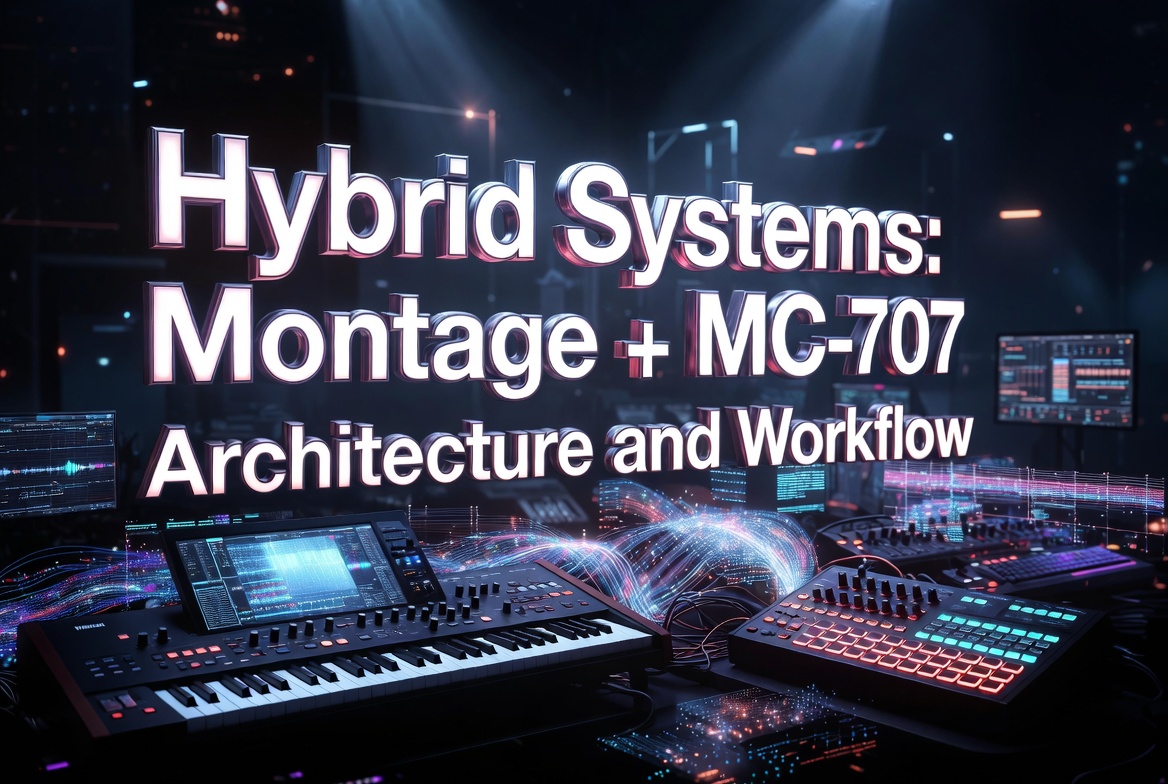
Hybrid Systems: Montage + MC-707 Architecture and Workflow

The Yamaha Montage M and the Roland MC-707 are both, on paper, complete instruments. The Montage is a flagship synth workstation with three distinct sound engines and the kind of polyphony and DSP headroom that makes most studio plugins look slow. The MC-707 is a compact groovebox with eight tracks, an internal sequencer, sample playback, and the kind of immediate hands-on workflow that makes laptop production feel laborious by comparison. ...
May 4, 2026 · 9 min · James M
Hardware Sequencers in 2026

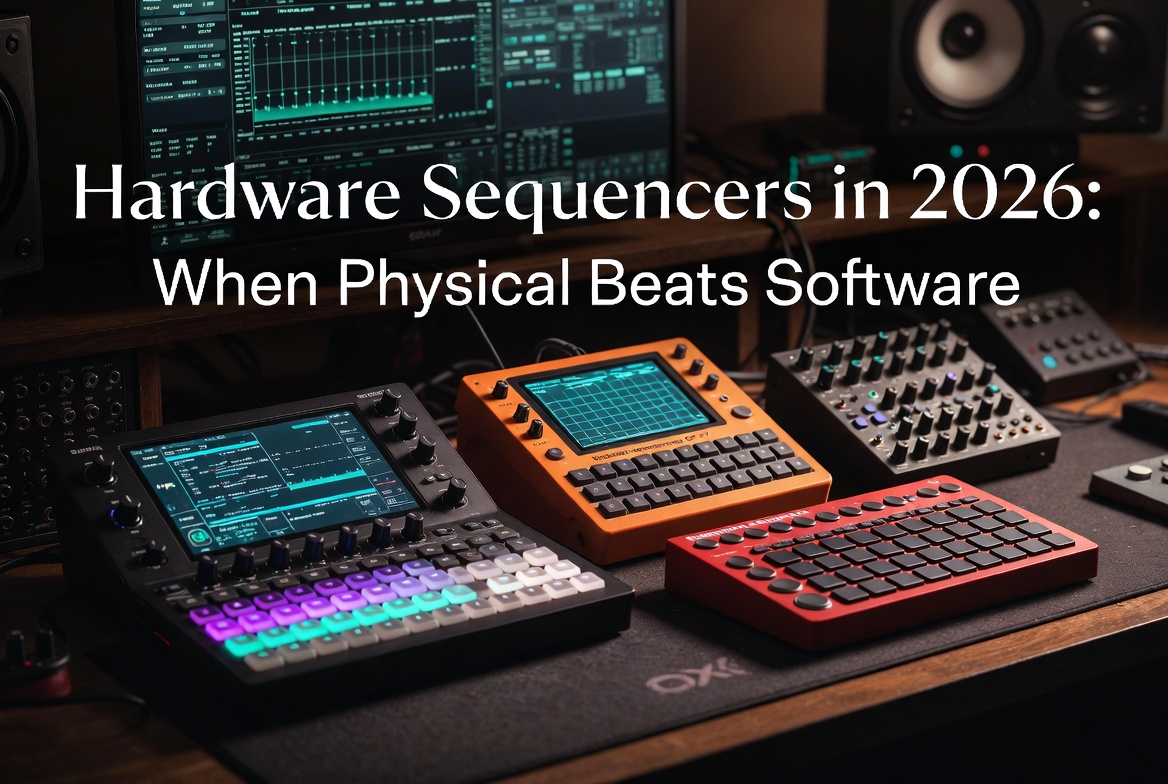
Hardware Sequencers in 2026: When Physical Beats Software

By mid-2026, the “in-the-box” vs “out-of-the-box” debate has fundamentally shifted. We no longer argue about analog warmth or filter aliasing - neural synthesis has made those distinctions almost invisible to the ear. The new battleground is cognitive load, and that is where dedicated hardware sequencers are quietly winning ground back. As I argued in The Automation Paradox, once AI can generate a passable 16-bar loop in seconds, the human’s job shifts to curation and intent. A hardware sequencer is the most direct tool we have for enforcing that intent. ...

May 2, 2026 · 6 min · James M
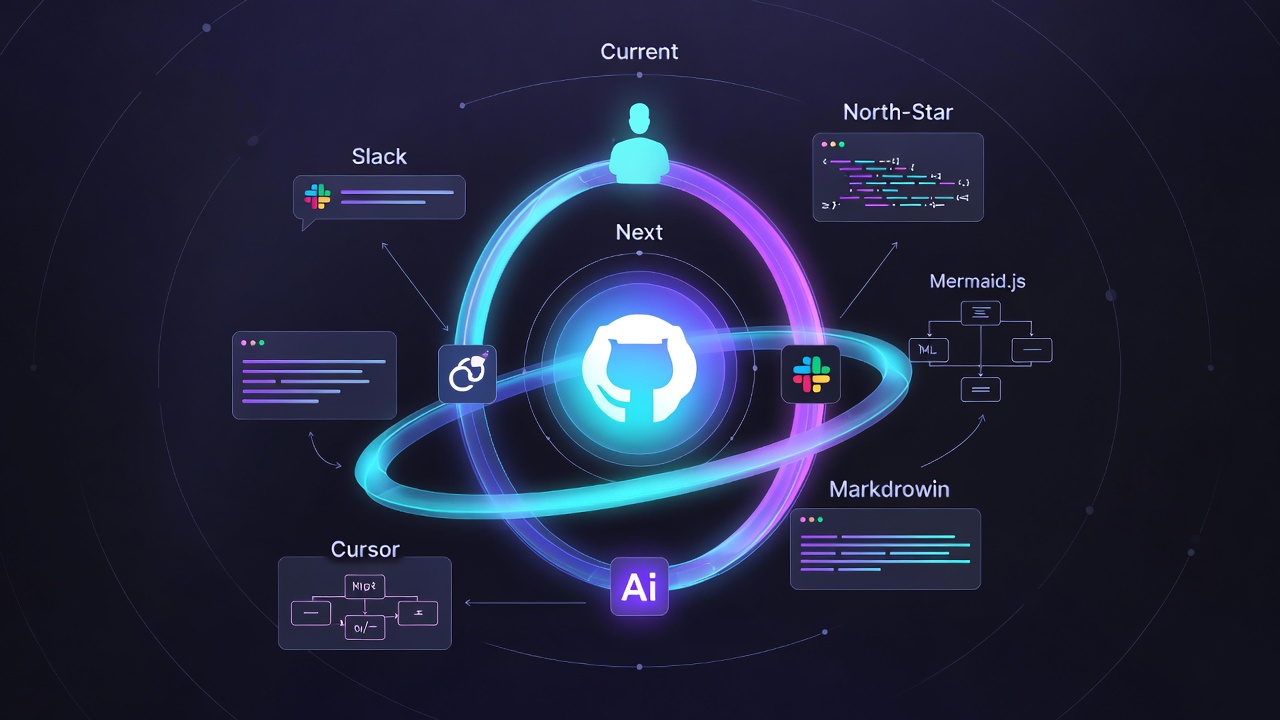
AI-Augmented Design Workflow Banner

My AI-Augmented Design Workflow: A 10-Minute Loop From Discussion to Documented Decision

TL;DR A combination of Cursor in the IDE, Claude Code and Codex in the terminal, and GitHub Spec Kit as the living contract has collapsed the discuss-design-document loop from days to under ten minutes Every meeting is transcribed and checked into GitHub alongside the design corpus, giving AI agents access to the full historical record - not just curated decisions but the debates that shaped them Model selection matters: cheaper, faster models for throwaway sketches and small refactors; expensive models (Opus) for large cross-repo work where the cost of a wrong answer is high The real transformation is cognitive flow - removing friction between thinking and recording means decisions get made and captured while the problem is still fresh, with almost no context switching AI is now suggesting improvements faster than the author can implement them; the next bottleneck is compaction, not generation - asking the model to reduce documents to their load-bearing claims rather than produce more content Since making a combination of Cursor in the IDE and Claude Code and Codex in the terminal the centre of my working day - with ChatGPT for general questions and GitHub Spec Kit holding the design contract - the way I move from a question on Slack to a documented design decision has changed beyond recognition. ...

April 29, 2026 · 14 min · James M
A year of AI agents

A Year of Agents, and What is Coming Next

TL;DR The defining shift from April 2025 to April 2026 is the move from “ask” to “delegate” - agents now run for minutes, open files, execute shells, and return results rather than waiting for each prompt Key developments that drove this: coding agents becoming operators (Claude Code, Cursor, Codex), MCP standardising tool access, spec-driven development going mainstream, and context windows expanding to millions of tokens In the next two years, longer-horizon agents, multi-agent coordination, persistent personal AI memory, and computer-use automation will move from early features to default expectations The working day is reshaping around less typing and more reviewing - the skill that matters is judgement over diffs, not typing speed or boilerplate generation To adapt now: pick a stack and use it daily, write specs before code, build the habit of reviewing diffs fast, and move procedural knowledge into reusable agent skills A year ago, in April 2025, “AI in your workflow” mostly meant a chat window in a browser tab and an autocomplete plugin in your editor. You typed, it suggested, you accepted or rejected. The interaction model was small. The blast radius was small. The verb was “ask”. ...

March 13, 2026 · 12 min · James M
Where Should Documentation Live Banner

Where Should Documentation Actually Live? Thinking Out Loud in the AI Era

TL;DR Documentation sprawl across Confluence, Jira, SharePoint, Google Docs, GitHub, and Miro is not a tool problem - it is a joints problem: the same decision exists in four places, drifting out of sync immediately Three forces constantly pull against each other: source of truth (one canonical home), discoverability (right surface for every audience), and governance (real access control) - optimising for any one breaks the others The proposed shape: docs-as-code for engineering artefacts in Git, collaborative tools for business content, a read-only render layer between them, and an AI-assisted discovery layer across all of it AI tooling weakens the old boundary - a business user can get a summary generated from a markdown master without ever seeing the file, and an engineer can draft an ADR pulling context from Confluence and Jira automatically Several genuine open questions remain unsolved: versioning across boundaries, who owns the render pipeline, and whether Jira tickets as documents should be formalised or fought against This post is me thinking out loud. It is not a proposal, not a recommended pattern, and possibly not even a useful framing. I am writing it because I am actively stuck on the question, and writing in public tends to be the fastest way I find out what I have got wrong. Feel free to disagree with any of it. ...

March 12, 2026 · 11 min · James M