Unbaffled with Jim Al-Khalili Banner

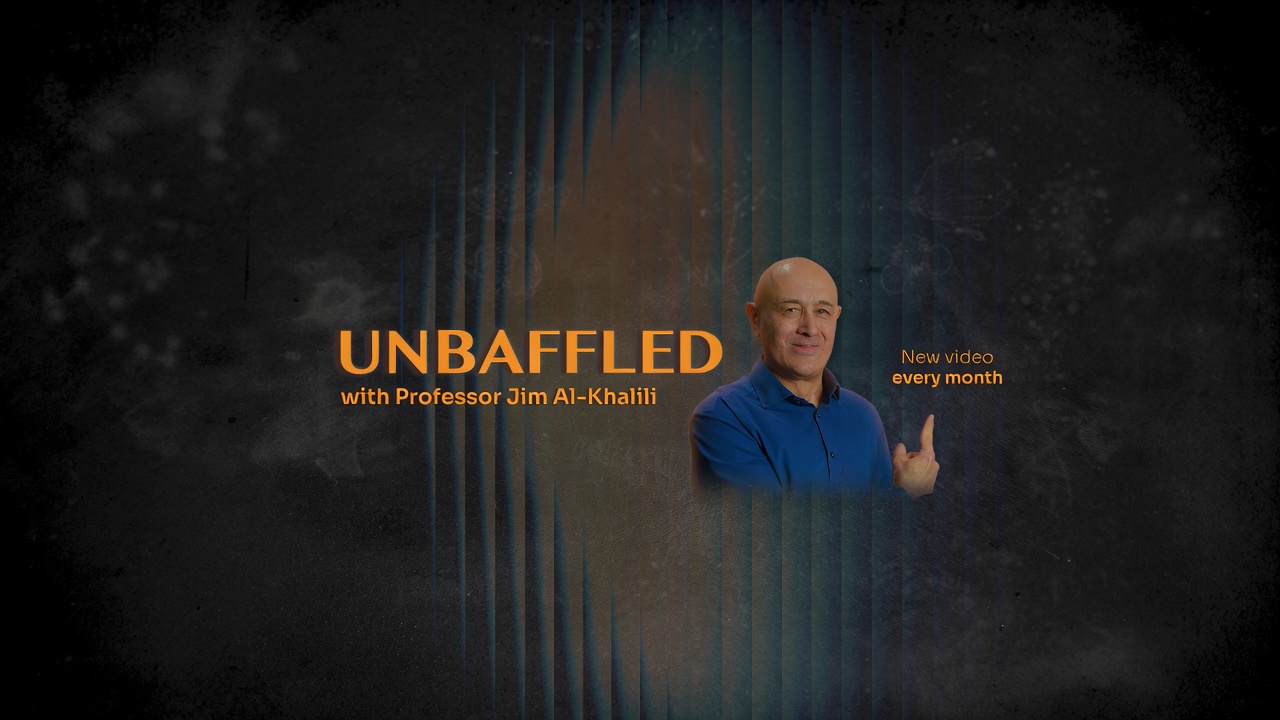
Unbaffled with Jim Al-Khalili: Making the Weirdest Ideas in Science Feel Intuitive

I have already written about the two physicists who did the most to talk me into taking many-worlds and the wider multiverse seriously, so when a new YouTube channel showed up in my feed built entirely around the premise that science doesn’t have to be baffling, I was always going to click. Unbaffled, presented by Professor Jim Al-Khalili, launched on 25 June 2026, and in its first three weeks it has already covered quantum interpretation, brain lateralisation, and whether time travel is physically permitted. That is a wide spread for a channel barely a month old, and it is exactly the range I wanted a profile to capture. ...

July 15, 2026 · 7 min · James M
Sean Carroll - The Physicist Who Made Many-Worlds Feel Reasonable Banner

Sean Carroll: The Physicist Who Made Many-Worlds Feel Reasonable

I already owed Sean Carroll a proper post. When I wrote A New Universe All Throughout The Day I admitted, almost in passing, that he was the person who really led me into taking the many-worlds interpretation seriously rather than treating it as a science-fiction gimmick. Then two New Scientist videos landed in front of me within a few weeks of each other - one titled We May Never Understand Reality and one titled Why Quantum Physics Says There’s a Multiverse - and I realised I had been circling him for months without ever writing the man down. This is me doing that. ...

July 2, 2026 · 10 min · James M
Quantum Computing: A Threat to Bitcoin? Banner

Quantum Computing: A Threat to Bitcoin?

TL;DR Quantum computers threaten Bitcoin because Shor’s algorithm can derive a private key from an exposed public key, breaking the ECDSA and Schnorr signatures that authorise transactions. The threat is real but not imminent. Credible estimates put a cryptographically relevant quantum computer somewhere between 2029 and 2035. Research cited by Google and Bitcoin security analysts suggests a roughly 10% chance of a break by 2032. Around 6.9 million BTC - close to a third of all supply - sit in addresses with exposed public keys, including roughly 1 million BTC believed to belong to Satoshi Nakamoto. These are the coins most at risk. Mining (SHA-256) is far less exposed. Grover’s algorithm only offers a quadratic speed-up, which higher network difficulty can absorb. Bitcoin’s defences are forming: BIP-360 adds a quantum-resistant address type, BIP-361 proposes a controversial migrate-or-freeze deadline, and NIST has finalised post-quantum standards (ML-DSA, SLH-DSA) for future signature schemes to draw on. The safest action for an ordinary holder today: use a modern address and never reuse it, so your public key stays hidden behind a hash until you spend. Overview Quantum computing is one of the most significant theoretical threats to modern cryptography. For Bitcoin, the core concern is that a sufficiently powerful quantum computer could run Shor’s algorithm to solve the elliptic curve discrete logarithm problem - the hard maths that secures Bitcoin’s public-key cryptography. ...

May 20, 2026 · 9 min · James M
A New Universe All Throughout The Day Banner

A New Universe All Throughout The Day

I have always had this strange gut feeling that the universe is, in some sense, new all throughout the day. Not new in the dramatic science-fiction sense, where everything resets and starts over, but new in the sense that reality seems to keep unfolding into fresh versions of itself depending on what happens next. A conversation goes one way instead of another. You decide to go out, or stay in. You send the message, or you leave it unsent. Tiny differences, and suddenly the entire shape of the day changes. ...

April 16, 2026 · 4 min · James M
Why Is There Something Rather Than Nothing? Banner

Why Is There Something Rather Than Nothing?

TL;DR The deepest question in cosmology: why is there something rather than nothing? - physics explains how the universe behaves once it exists, not necessarily why it exists at all Physicists’ “nothing” is not absolute absence - quantum vacua still have fields, rules, and structure Elegant physical laws and mathematics may be discovered rather than invented - part of why anything could exist Consciousness may be fundamental or emergent; either answer changes what a complete explanation would require I am a fascinated amateur, not a physicist - treat this as thinking out loud, not a verdict One of the strangest facts about reality is that there is any reality at all. ...

April 15, 2026 · 14 min · James M