Reasoning Models in 2026 - o3, R2, and the Compute-at-Inference Shift Banner

Reasoning Models in 2026: o3, R2, and the Compute-at-Inference Shift

Two years ago the way to make a model better was to train a bigger one. By the start of 2026 that recipe has stopped being the most interesting answer. The frontier has moved to a different lever - letting the model think for longer at inference time, generating intermediate reasoning, and only then producing the final answer. The category has a name now (reasoning models) and a family of products built around it. The interesting questions are no longer whether the trick works, because it clearly does, but when to reach for one, where it lands in production, and what the costs actually look like once the demo glow wears off. ...

May 8, 2026 · 15 min · James M
GPT-5.5 release illustration

GPT-5.5 Is Here: Real Step Forward or Quiet Iteration?

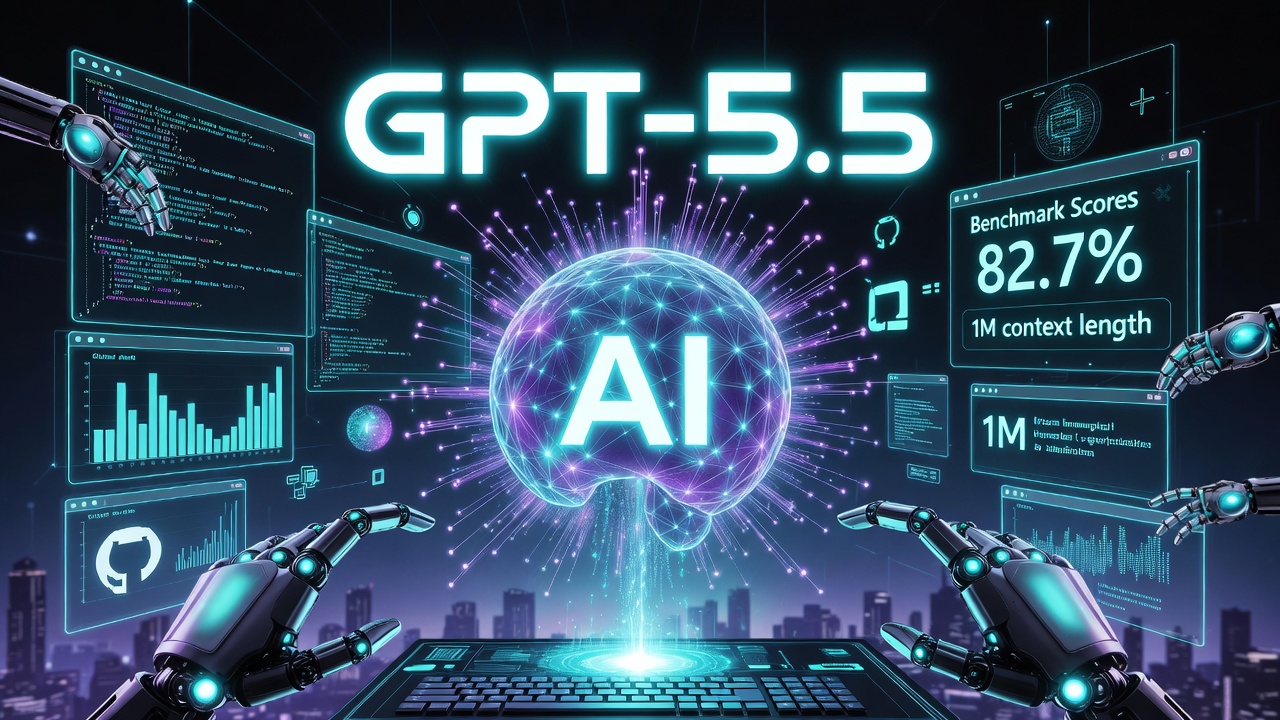
TL;DR GPT-5.5 (“Spud”) is the first fully retrained base model since GPT-4.5, with architecture and pretraining reworked from scratch with agentic objectives in mind It takes the top spot on Terminal-Bench 2.0 (82.7%) and GDPval (84.9%), narrowly beating Anthropic’s Claude Mythos Preview on agentic coding benchmarks A 1M-token context window is new for OpenAI, enabling whole-codebase reasoning and long multi-step agent runs without context collapse Pricing is competitive ($5/$30 per million input/output tokens) but the strategic story is about OpenAI building an integrated super app - chat, code, browser agent - all driven by one model The gains are incremental, not a leap - but the full retraining signals OpenAI is betting the next two years on autonomous agentic work, not chat OpenAI released GPT-5.5 on April 23, 2026, weeks after GPT-5.4 and only months after GPT-5. The cadence is starting to feel relentless. Codenamed “Spud” internally, GPT-5.5 is the first fully retrained base model since GPT-4.5 - architecture, pretraining corpus, and agent-oriented objectives all reworked from scratch. ...

April 24, 2026 · 6 min · James M
AI generated image

ChatGPT Images 2.0: Why Everyone Is Impressed

TL;DR ChatGPT Images 2.0 introduces a thinking mode that reasons through complex prompts before generating, dramatically improving instruction-following for multi-part requests Text rendering is finally reliable - legible across English, Japanese, Korean, Chinese, Hindi, and Bengali - unlocking infographics, menus, and slides as genuine use cases Web search during generation means Images 2.0 can pull accurate, current data into visual outputs rather than fabricating plausible-looking information Batch generation produces up to eight images from one prompt with consistent characters and style across all of them, solving a long-standing problem for narrative and sequential content The overall shift is from toy to tool: outputs are more predictable, less stylistically over-processed, and viable for production work rather than just prototyping A year ago, OpenAI’s image generation went viral for Studio Ghibli portraits. That was GPT Image 1 - impressive, playful, and fundamentally still a party trick. ChatGPT Images 2.0, released on April 22nd 2026, is a different thing entirely. It’s the version that starts to look genuinely useful. ...

April 23, 2026 · 6 min · James M

OpenAI Voice Engine

TL;DR OpenAI Voice Engine is a text-to-speech model that can clone a realistic voice from just a 15-second audio sample It produces emotive, natural-sounding speech despite using a small model and minimal training data Access has remained in limited preview since its 2024 announcement due to responsible AI concerns around voice cloning and impersonation Approved testers must obtain clear consent from voice providers and inform listeners that voices are AI-generated As of 2026, the technology is restricted to approved partners and researchers rather than general availability About OpenAI’s Voice Engine is a text-to-speech tool which can create realistic voices from just a 15-second audio sample. It is notable that a small model with a single 15-second sample can create emotive and realistic voices. To ensure responsible use testers must get clear consent from voice providers, avoid creating user-generated voices, and inform listeners that the voices are AI-generated. ...

March 31, 2024 · 2 min · James M

Stargate

TL;DR Stargate is a $500B AI infrastructure programme announced in January 2025 - the equity partners are OpenAI, SoftBank, Oracle, and Abu Dhabi sovereign investor MGX Construction has already started in Texas with more sites planned, aimed at training and serving the next generation of frontier AI models The scale signals where compute spend is heading - tens of billions per cluster is becoming the price of admission at the frontier The initial $100B commitment is intended to scale to $500B by 2029, combining OpenAI’s models, SoftBank and MGX capital, and Oracle’s data-centre and infrastructure capabilities Worth tracking as a useful proxy for how seriously the industry takes the compute side of the AGI race About Stargate is a $500 billion AI infrastructure project announced in January 2025. The equity partners are OpenAI, SoftBank, Oracle, and MGX, with Microsoft and Nvidia listed as technology partners rather than equity investors. ...

March 30, 2024 · 2 min · James M