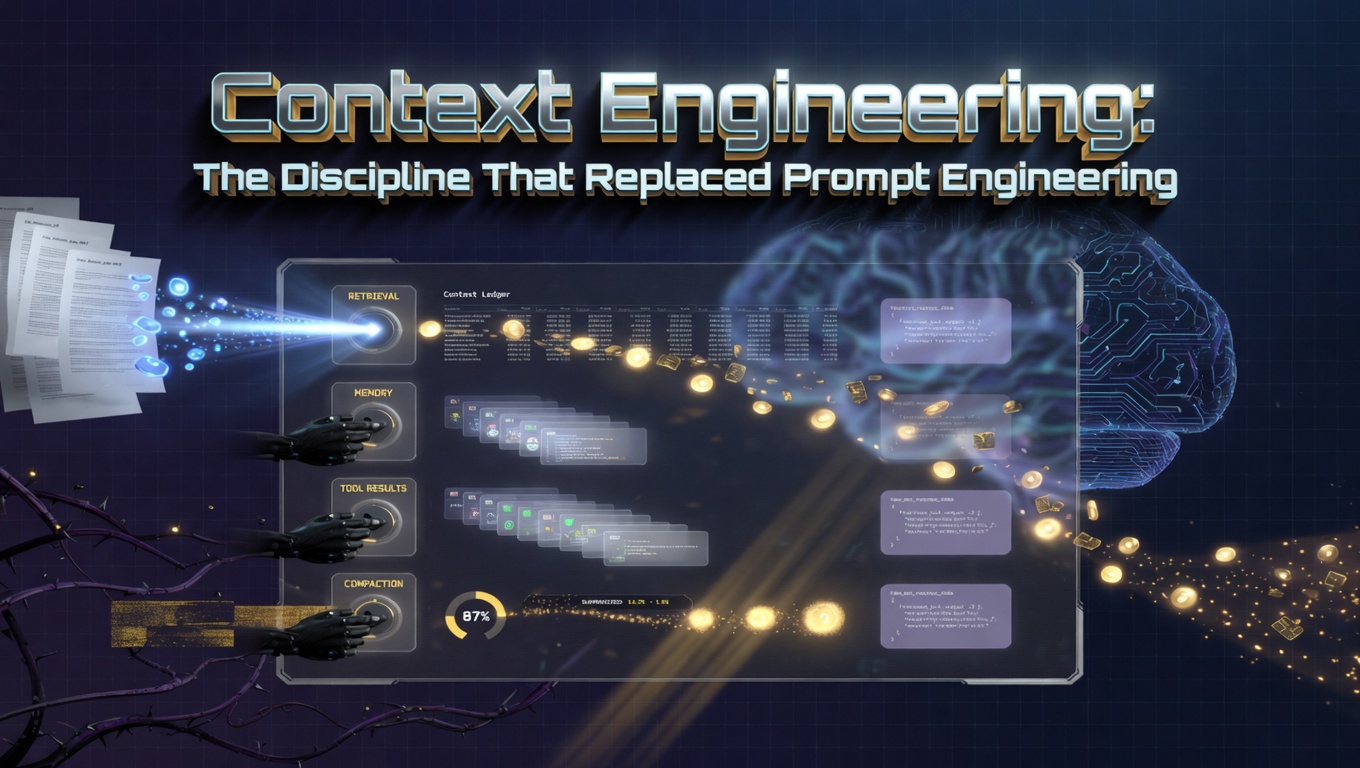
Context Engineering: The Discipline That Replaced Prompt Engineering
TL;DR Prompt engineering optimised the wording of a single human-written request. Context engineering optimises the entire set of tokens in the model’s window across a whole run - system prompt, tool definitions, retrieved documents, tool results, conversation history, and memory The shift happened because of agents. The window is no longer one prompt you wrote - it is an accumulation that grows on every step, and most of it is produced by the system, not by you More context is not better context. Research on “context rot” and the older lost-in-the-middle effect show model accuracy degrades as the window fills, even well below the advertised limit The four levers are retrieval (what you pull in), memory (what persists across runs), tool results (what tools dump back), and compaction (what you summarise and discard) Treat the window as a budget. Measure its token composition, design tools to return terse output, curate rather than accumulate, and keep the static prefix stable so prompt caching still works For a few years, “prompt engineering” was the named skill of working with language models. It meant finding the wording, the framing, the few-shot examples, and the role instructions that coaxed the best answer out of a single request. It produced a small industry of prompt libraries, prompt marketplaces, and job titles. And in 2026 it is mostly gone, absorbed into something larger and harder. ...