Deep dives into graph algorithms and network analysis. Topics include PageRank, centrality measures, community detection (Louvain, modularity), and practical scaling techniques for production graph systems. Practical guides for building graph-based recommendation systems, fraud detection, and leveraging managed graph databases like Neptune Analytics.
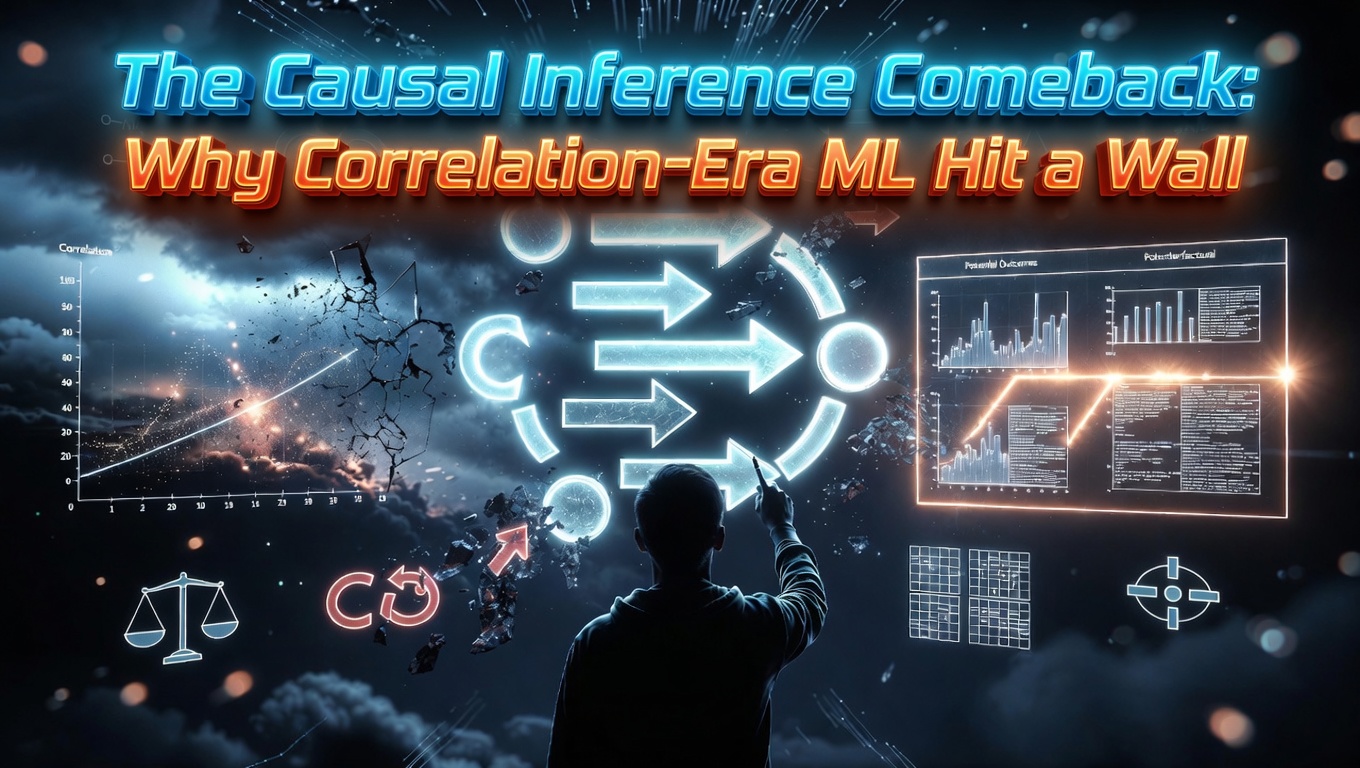
The Causal Inference Comeback: Why Correlation-Era ML Hit a Wall
For most of the deep-learning era, the answer to “why is this happening in our data?” was “we do not actually care - we care that our model predicts well.” For a wide range of problems, that pragmatism worked. The models did predict well. The business outcomes followed. The causal questions were left to academics and economists.
The mood has shifted in 2026. The cases where prediction-without-understanding fails are now visible enough, and expensive enough, that causal inference has moved back from the academic margins to something practitioners need to know about. It is not displacing predictive ML - it is filling in the gap that became unignorable.
...
Scaling Graph Algorithms: From Prototypes to Production
Graph algorithms work great on your laptop. PageRank on a 100,000-node graph finishes in seconds. Louvain finds communities instantly.
Then you try it on production data - a graph with 5 billion nodes and 50 billion edges - and suddenly everything takes hours, consumes terabytes of memory, and melts your infrastructure.
The jump from prototyping to production in graph algorithms is steep. But it’s a known problem with known solutions.
...
Community Detection Algorithms: Finding Clusters and Groups in Network Data
If you’ve ever looked at a social network and wondered “why is this group of people more connected to each other than to the rest of the network?”, you’ve just articulated the community detection problem.
Real networks aren’t random. They have structure. People cluster with people like them. Products cluster with complementary products. Proteins in cells interact with nearby proteins more than distant ones.
Community detection algorithms find these natural groupings automatically. And unlike clustering algorithms (which work on features), graph community detection works purely on the structure of connections.
...
Graph Algorithms Explained: PageRank, Centrality, and Why They Matter
Graph algorithms often get treated as academic curiosities - something you learn in a computer science course and then never think about again. But they’re actually the hidden backbone of some of the most profitable systems on the internet.
Google’s entire empire was built on PageRank. LinkedIn’s recommendation engine uses centrality measures. Fraud detection teams use degree distribution to spot money laundering rings. And if you’re working with Neptune Analytics or building graph systems in 2026, you need to understand these patterns.
...