A list of all my favourite computers, phones & games consoles I’ve mostly owned or used at school & college, in order of purchase / initial use …
Computers
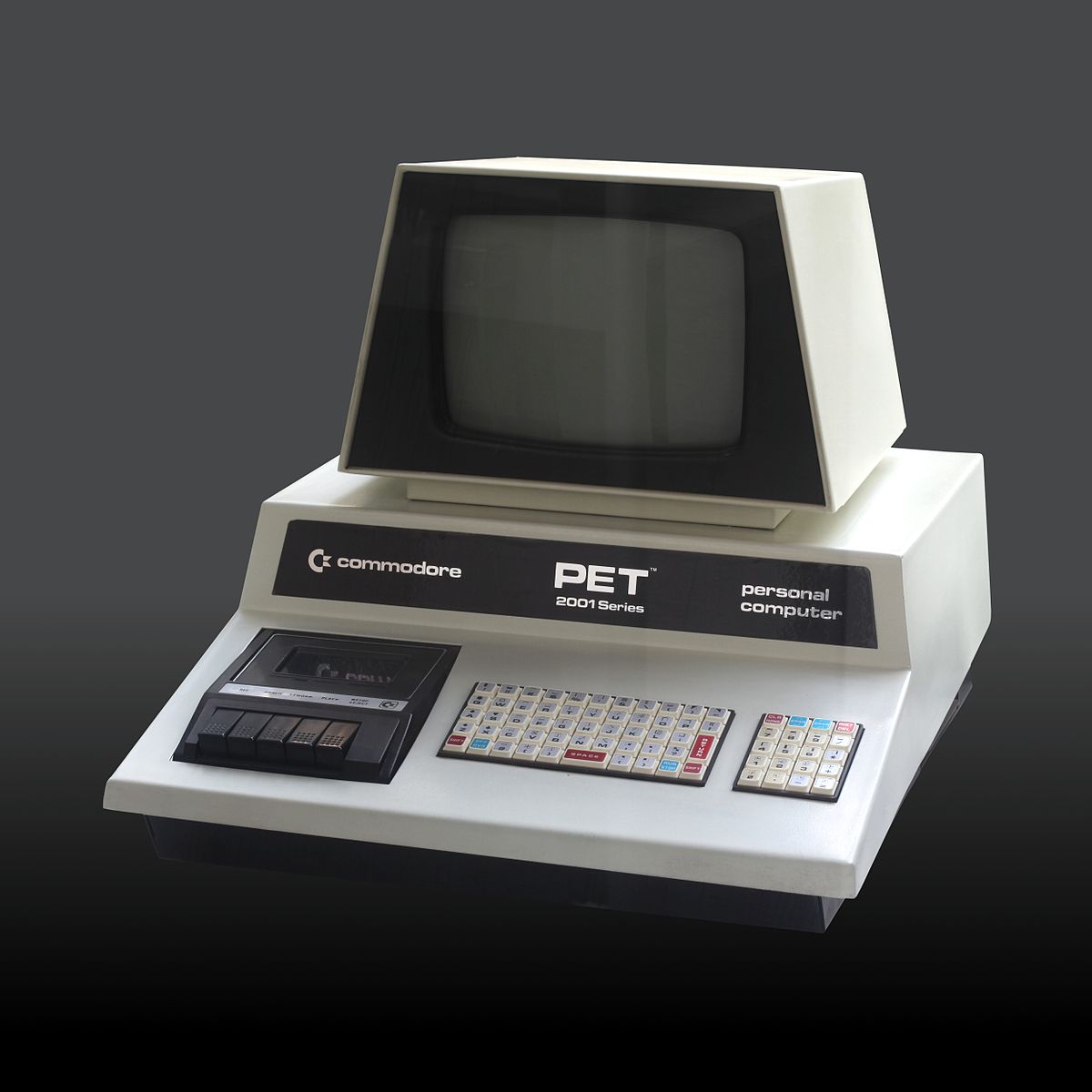
Commodore PET (1977)
The Commodore PET was the first computer I learnt BASIC in the school computing club (1981)
The first program I wrote was an animated Christmas card as part of a school competition, I was quite proud of it. We were meant to showcase all of our programs at a public school event however I forgot to take the tape with me to school, I was truly gutted. I also mislaid the tape at home so have lost all those initial programs I wrote :(
BBC Micro Model B (1981)
I didn’t own this personally at home but used it in the school computing club
Commodore VIC-20 (1981)
I didn’t own this personally at home but used it in the school computing club
Oric-1 (1982)
I didn’t own this personally at home but used it in the school computing club
Dragon 32 (1982)
I didn’t own this personally at home but used it in the school computing club
Sinclair ZX Spectrum 48k (1982)
The Spectrum 48k was my very first home computer and therefore was very special to me. It had a unique rubber keyboard. I used to spend hours on it writing BASIC programs & playing games.
I spent so long on the Spectrum one of my sisters suggested I should go to computing college which was absolutely the right decision for me, I never looked back.
Tomorrow’s World broadcast a computer program which I saved and loaded on the Spectrum, this was the first time I received anything remotely, I couldn’t understand how this was possible at the time, it took a few days for it to sink in !

Peripherals
- Alphacom 32 thermal printer
- Competition Pro joystick
- Kempston joystick interface
- Tape player/recorder
- I always wanted a ZX Microdrive but couldn’t afford it
Magazines
Commodore 64 (1982)
I was just blown away by this computer, it was the first time I appreciated the impact of Moore’s law
Peripherals
- Action Replay (Datel Electronics)
- This was pretty much the first peripheral I bought for a home computer, I was blown away that the computer could be extended and modified at the hardware level. I used this to save game state and hacking games typing in pokes & cheat codes etc.
- Commodore 64 Communications Modem (Compunet)
- This completely blew my mind as it was the first time I got online from home, to connect to other computer systems such as bulletin boards & Compunet.
- Compunet was also the first time I sent & received email, I remember I couldn’t wait to get home for school to see if I had any new email, seeing the envelope icon appearing & flashing next to a postbox was magical to me.
- My phone bill was ridiculous (£100s per month, and this was back in the 80s), to this day I still can’t believe I got away with spending so long and so much money on phone bills, my parents obviously thought it would be benefical for me and / or perhaps it kept me out of trouble.
- Come to think of it I was extremely lucky to have early access to many great computers & peripherals, at home & school :)
Apple IIe (1983)
My dad had one of these at home, although I only really used it to play a few games
IBM Personal Computer (1983)
We used the IBM Personal Computer at computing college to learn;
- Assembly language - low level programming
- Borland Turbo Pascal - programming language
- Lotus 1-2-3 - spreadsheet
- Microsoft MS-DOS - operating system

Data General Eclipse MV/15000 (1986)
As part of my first job as a computer operator (1992) I was responsible for operating the Data General MV/15000 mainframe computer & writing automation scripts. This has been one of my favourite jobs over the years as I had a lot of responsibility and had to do a lot of problem solving late into the evening, I learnt a lot. We didn’t have the internet or up-to-date manuals back then :)

Peripherals
- Kyocera Laser Printer
- I programmed using Page Description Language (PDL) to re-create a load of forms which we previously had to buy externally pre-printed, this saved us a lot of money.
Software
- AOS/VS II - Operating System
- CLI32 - developing automation scripts
- Micro Focus COBOL - developing reports
- Cyberscience CyberQuery / CyberScreen (CQCS) - building Business Intelligence & database solutions
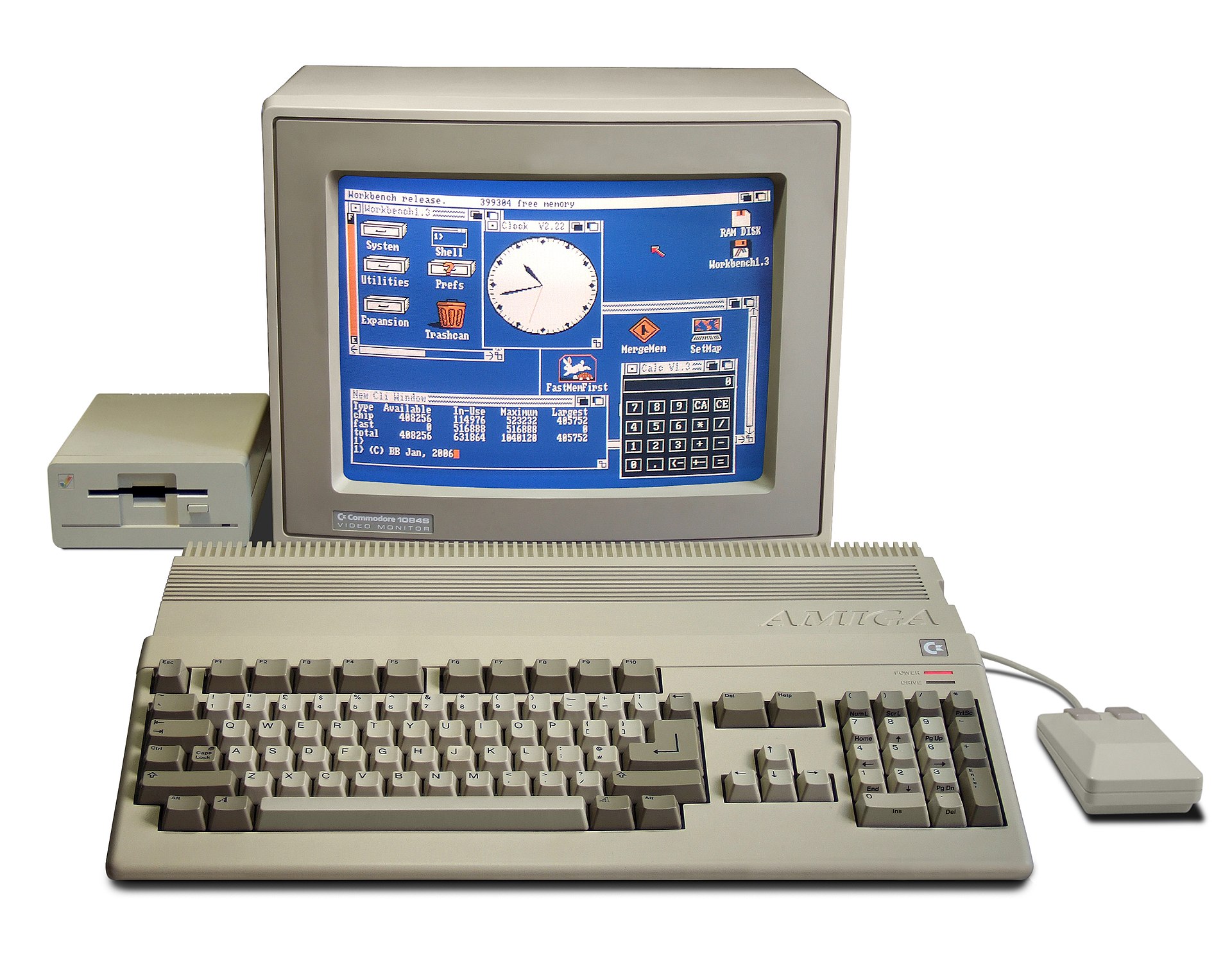
Commodore Amiga 500, 600, 1200, 1500 (1987)
Another ground-breaking computer, the Amiga 500 was by far the best Christmas present I ever had. I subsequently purchased 3 further models below. This was the first computer I used which had a ‘windows’ system. The graphics & sound were game changing.


Peripherals
- A500-HD+ - hard drive
- Amiga 500 512KB RAM expansion
- Commodore 1084 Monitor
- Competition Pro Extra (clear) joystick
Sony Vaio Laptop, VGN-NR21S/S, 1.66GHz with 15.4 Inch Display (2007)
My first real laptop, which marked the shift from desktop-bound computing to working on the move. The 15.4" display was excellent for the time, and it gave me the freedom to work from anywhere - a game changer for productivity and flexibility.
Inspiron 1545 : Intel Celeron Dual Core T3000 (2009)
An affordable budget laptop during the post-financial crisis era. While modest in specs, it was reliable for everyday tasks and web development work. The value-for-money approach resonated with me during lean economic times.
Dell Studio Core2 DUO 4GIG (2009)
A desktop workstation that provided solid performance for software development and creative projects. The larger form factor meant better cooling and expandability compared to laptops, making it ideal for intensive compilation and build tasks.
Dell Alienware M17x R5 3.4 i7, 24GB,256GB SSD (2013)
A high-end gaming and workstation laptop that represented a significant step up in processing power. The 17" display, dedicated graphics, and SSD storage made it exceptional for both demanding games and professional development work. This machine could handle anything I threw at it.
HP EliteBook 840 G3 i5-6200u,4GB,500GB HD (2016)
A corporate-grade ultrabook issued for professional work. While more modest in specs than my personal machines, its lightweight design and long battery life made it ideal for working across multiple client sites. The durability and build quality were exceptional.
DELL PowerEdge™ T105 (2017)
My first home server, which opened up a whole new world of self-hosting and infrastructure experimentation. Running services locally rather than relying solely on cloud platforms gave me hands-on experience with system administration, networking, and data sovereignty.
HP Elitebook 840 G4 14" i5 7th gen SSD 256GB RAM 8GB (2018)
An upgraded work laptop with better specs than its predecessor. The 7th gen i5, SSD, and increased RAM made it genuinely capable for development tasks. This machine struck a good balance between portability and performance for on-site consulting work.
Dell OptiPlex 7070 MT (2019)
A mid-range desktop workstation for professional use. The MT (Minitower) form factor offered good expandability while remaining reasonably compact. Solid performance for office work, development, and multimedia tasks without the premium price tag of gaming-oriented systems.
Apple MacBook Air M1 13.3" (2020)
My entry into the Apple Silicon era and a remarkable machine. The M1 chip’s performance-per-watt was genuinely impressive, delivering desktop-class performance in a thin, light package with exceptional battery life. It completely changed my perspective on laptop design and efficiency, making it my daily driver for both work and personal projects.
Games Consoles
Binatone TV Master (1976)
My first gaming console, though at age 5 I have only vague memories of it. This was the era of simple paddle games and blocky graphics, yet it was the gateway to a lifetime of gaming. The fact that it connected directly to the TV was revolutionary at the time.
Atari 2600 (1978)
A legendary console that defined a generation of gaming. I spent countless hours on iconic games like Pac-Man, Space Invaders, and Adventure. The Atari 2600 proved that home gaming could be more than simple paddle games - it was the beginning of proper arcade experiences in the home.
Sega Megadrive (1990)
The 16-bit leap was transformative. The Megadrive delivered faster, more colorful graphics and deeper gameplay than the previous generation. Sonic the Hedgehog was iconic, and the library of games gave me hundreds of hours of entertainment during the early 90s.
Super Nintendo Entertainment System / SNES (1991)
Nintendo’s answer to the Megadrive delivered equally impressive graphics with an outstanding library of games. The SNES introduced me to franchises like The Legend of Zelda, Final Fantasy, and Super Mario World. The controller design was ergonomic and the overall polish was undeniable.
Sony PlayStation (1995)
The original PlayStation was a watershed moment in gaming - 32-bit 3D graphics that blew away everything that came before. Games like Final Fantasy VII, Metal Gear Solid, and Resident Evil felt cinematic and immersive. The CD-ROM format allowed for massive game worlds and full voice acting.
Nintendo 64 (1997)
Nintendo’s bold 3D entry with the iconic three-pronged controller. Games like The Legend of Zelda: Ocarina of Time and Super Mario 64 were revolutionary in how they approached 3D gameplay. The N64 proved Nintendo wasn’t afraid to innovate, even if cartridge limitations meant smaller game worlds than its competitors.
Sony PlayStation 2 (2000)
The PS2 was a juggernaut - the most successful console of its generation and arguably all time. The DVD drive was a bonus, but the real appeal was the incredible library of games. Grand Theft Auto, Metal Gear Solid 2, Final Fantasy X, and countless others kept me engaged for years.
Nintendo Wii (2006)
A console that changed gaming in unexpected ways. The motion controls were gimmicky at first, but games like Wii Sports and The Legend of Zelda: Twilight Princess showed the potential. It also brought my family into gaming in ways previous consoles hadn’t - accessibility was a superpower.
Sony PlayStation 3 (2007)
Sony’s powerhouse with the Cell processor delivered impressive graphics and online gaming capabilities. Blu-ray was a nice bonus, but the real draw was the exclusive games library - Uncharted, The Last of Us, God of War, and many more. The PS3 also doubled as a media center for HD content.
Sony PlayStation 4 (2013)
The PS4’s straightforward x86 architecture made it easier for developers, and the results showed in the quality of games. Bloodborne, Horizon Zero Dawn, Spider-Man, and Ghost of Tsushima pushed what console gaming could achieve visually and narratively. Online multiplayer matured significantly this generation.
Sony PlayStation 5 (2020)
The current generation brought remarkable speed improvements with the NVMe SSD, nearly eliminating loading times. Games like Ratchet & Clank: Rift Apart and Sackboy: A Big Adventure showcased the technical capabilities. Ray tracing became standard, and the DualSense controller’s haptic feedback added a new dimension to immersion.
Mobile Phones & PDAs
Psion Series 3 (1991)
An early PDA that pioneered portable computing for professionals. The Psion featured a physical keyboard, surprising battery life, and a suite of productivity apps (calendar, contacts, notes). It was revolutionary for staying organized on the move before smartphones existed.
Nokia 3210 (1999)
An iconic feature phone that epitomized late 90s mobile technology. The Nokia 3210 was ruggedized, had excellent battery life, and SMS messaging was becoming the norm. The game Snake came pre-loaded, and the customizable faceplates let you personalize your device - a big deal at the time.
BlackBerry (~2000)
BlackBerry dominated the early 2000s as the phone for business professionals. The physical QWERTY keyboard made email and messaging genuinely practical on a mobile device. Push email was a killer feature, and the secure messaging gave enterprises confidence in the platform. Status symbol and productivity tool rolled into one.
Sony Ericsson P800 (2002)
A visionary device that blended PDA functionality with mobile calling. The P800 featured a touchscreen (unusual for its time), slide-out keyboard, and decent camera. It was ahead of its time in many ways, showing what smartphones could become long before the iPhone arrived.
Sony Xperia Z3 (2014)
Sony’s flagship Android phone with waterproofing and solid build quality. The Z3 delivered premium performance and a clean Android experience. The excellent camera and IP65 dust/water resistance were standout features. This phone represented the best of Sony’s hardware engineering.
iPhone 8 Plus (2017)
My first iPhone, and it impressed me with its build quality, camera system, and ecosystem integration. The dual camera setup offered compelling portrait mode and telephoto capabilities. Wireless charging and water resistance were conveniences that became standard expectations.
Samsung Galaxy S10 (2019)
Samsung’s flagship with a cutting-edge display, triple camera array, and in-display fingerprint sensor. The 120Hz display was buttery smooth, and the camera system offered flexibility with ultra-wide and telephoto lenses. A powerful Android experience that showed Samsung could compete with Apple’s iPhone at the premium end.
iPhone 13 Pro Max 128GB Graphite (2021)
My current flagship iPhone, offering Pro-level features in a large package. The A15 Bionic processor is incredibly powerful, the camera system (with macro mode and ProRes video) is professional-grade, and the 120Hz ProMotion display is silky smooth. It’s a device that feels both premium and practical for daily use and creative work.